If you like our blog,
check out the journal!

Subscribe to Leadership Journal

Save 21%


twitter updates


    Seminary &
    Grad School Guide
    Search by Name


    Or use Advanced Search to search by major, region, cost, affiliation, enrollment, more!


    blogs we're watching


    books we're reading


    « Cars, Cup Holders, & Complaining | Main | Out of Context: John Burke »

    October 22, 2006

    Who’s More Spiritual: Emergent or Traditional Evangelicals?

    cherub.jpgOkay, so no one's had the chutzpah to frame the question so baldly. But each group seems to assume the answer in its favor--at least, that's the impression you'd get from some emergent critiques of traditional evangelicals and from some traditional-evangelical critiques of emergents. But what if we asked the question directly, and tried to answer it just as directly: Who is more spiritually mature? On the whole, are emergent believers or traditional evangelicals more faithful in their following of Christ?


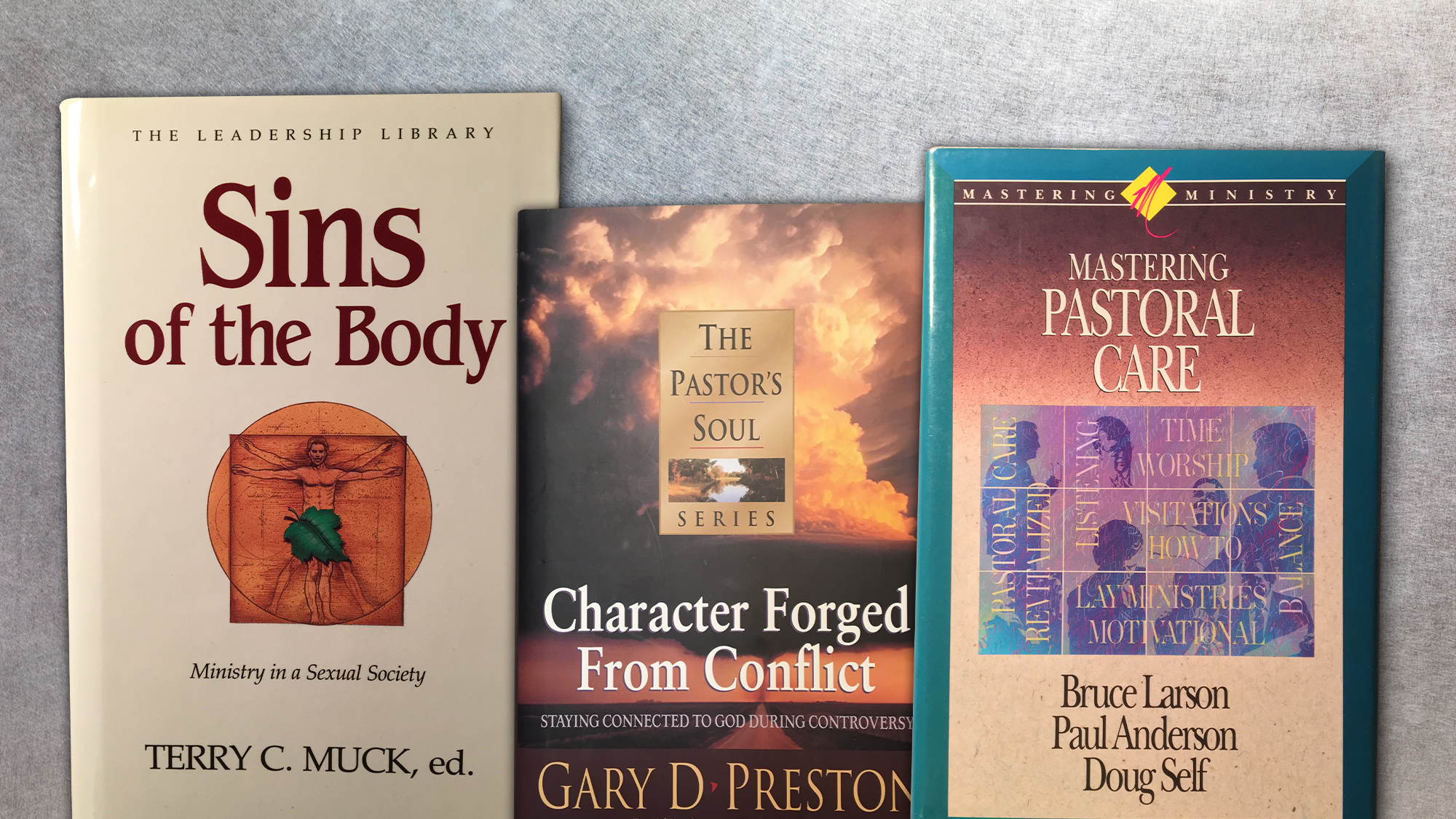
    To answer, we need a clear standard for measuring Christian spirituality. The best one is given by Jesus (Mark 12:29-31), but presumably both emergents and traditionals have already read that and used that for their critiques of the other. Could we find a standard of Christian spirituality that encompasses Jesus' teaching yet offers fresh points of differentiation? We might consider the four "nonnegotiable essentials" of Christian spirituality laid out by Ronald Rolheiser in The Holy Longing:

    1. Private prayer and private morality: "In many of the spiritual classics of Christian literature, the writers ? suggest that we will make progress in the spiritual life only if we, daily, do an extended period of private prayer, and only if we practice a scrupulous vigilance in regards to all the moral areas within our private lives. In essence, that is the first nonnegotiable within the spiritual life."

    2. Social justice: "? according to the Jewish prophets, where we stand with God depends not just upon prayer and sincerity of heart but also on where we stand with the poor. ? All Christian churches have always taught this, in one way or the other, and they have also always, in their best expressions, lived it out."

    3. Mellowness of heart and spirit:
    "Both as liberals and conservatives we too easily write off this third prong of the spiritual life, rationalizing that our causes are so urgent, we are so wounded, and our world is so bad, that, in our situation, anger and bitterness are justified. But we are wrong?"

    4. Community as a constitutive element of true worship:
    "? anyone who claims to love God who is invisible but refuses to deal with a visible neighbor is a liar, for one can only really love a God who is love if one is concretely involved with a real community (ultimately an ?ecclesial community') on earth."

    Being fool enough to set out on a fool's errand, I now offer my thoughts as to whether traditionals or emergents better capture these essentials.

    On "private prayer and private morality," I give the nod to traditionals, who have strongly emphasized daily "quiet times" and published multitudinous devotional books and guides, as well as scrupulously observed not swearing, not watching movies that might incline one to lust, and so on. Score so far: Traditionals 1, Emergents 0.

    On "social justice," I give the nod to emergents, who from the beginning have emphasized the missio dei, the mission of God to the world in compassion and justice, and who have called congregations not so much to church growth as to church giving. Emergents have also readily and in widespread ways engaged the problems of AIDS, global warming, and Darfur. Score so far: Traditionals 1, Emergents 1.

    The category "mellowness of heart and spirit" does not play to traditionals' strengths, given their more immediate descent from fundamentalism, which needed to oppose the corrosive effects of modernism, plus traditionals' many parachurch ministries, which require fundraising appeals to survive. The Emergents move ahead, 2-1.

    In the final category, "Community as a constitutive element of true worship," however, traditionals lead. Though emergents desire authenticity and community, several emergent-flavored books (like this one) make it seem like you can set up your own organic alternatives to a local church that has pastoral oversight, a connection to tradition, and the sacraments. Bad idea. Traditionals tie it up in the fourth quarter: 2-2.

    A tie. Hmmm.

    If this assessment has any value (and many, I'm sure, will say it doesn't), it would say the following:
    ? If traditional evangelicals want to grow in the areas of social justice and "mellowness of heart and spirit," one of their best teachers would be emergents.
    ? Conversely, if emergents want to grow in the area of private prayer and private morality, and "community as a constitutive element of true worship," they might find tutoring at the knee of traditionals.
    ? Therefore, if we were to redo this assessment in five years, the group that will be "most spiritual" will be the one who learns the most from the other.

    Posted by Kevin Miller on October 22, 2006


    Trackback Pings

    TrackBack URL for this entry:
    http://blog.christianitytoday.com/mt/mt-tb.cgi/153


    Comments

    Hmmm, Kevin. Where to begin? As an emerging fundamentalist I think a real problem with this exercise comes immediately into play with the assmuption that emergents agree with traditionalists on the "essentials". My observation is that emergents are adamant that belief in abosultes would automatically render a contestant into the traditional category. All of the 'big' emergent blogsites are quite proud of their lack of certainty on spiritual issues. That would make the assment of any of your four categories a tough one in that camp, wouldn't it?

    If one is to stake the 'spirituality' game on Jesus' words, one would need to look at John 14: 15 where he said, "If you love me, you will obey what I command." God says the same thing in the Old Testament too many times to count here. Since Jesus said he had come to fulfill the law rather than to abolish the law, this aspect must come into play also. There are Ten Commandments in the Old Testament as well as the two NT ones you have included here. All must be taken into consideration. And yet, we are told that we can recognize a really spiritual person by their fruit (of the Spirit). You know them, love, joy, peace, gentleness, goodness, faith.

    I would have to come down on the side of fruit rather than plants. Whether one is emergent or traditional, if the fruit isn't there, so what?

    Posted by: Melody at October 22, 2006

    Who is more spiritual? What a ridiculous comparison. Neither group has ever claimed they were more "spiritual" than the other and by you setting up such a poor straw man you undermine the premise of your who article.

    Posted by: blind beggar at October 23, 2006

    This question is immature!

    Posted by: Wayne Field at October 23, 2006

    Of course you know very well that these are mind-bogglingly broad generalizations. Especially in the area of "mellowness of heart and spirit," much of the emergent stuff I read is very reactive to and hostile to the traditional church. It is felt by many emergents--rightly or wrongly--that the traditional church sold them a bill of goods that they're only now extricating themselves from. On the other hand, I think it's right to give them the nod regarding social justice.

    I like the idea that the true "winners" will be the ones most willing to learn from others.

    Posted by: Keith Schooley at October 23, 2006

    Hmm. Curious that the standard for spiritual maturity left out doctrinal fidelity (and I would suggest the Nicene Creed as the standard - historical, trinitarian and avoids the controversies that have developed since the 16th century). Both emergents and some traditionalists are having problems affirming the trinity these days.

    And as for "social justice", that is a loaded term these days. If it means caring for the poor, orphans and widows, it is a good standard. If it means the assumption that all who are poor are poor because they are oppressed by the rich, then it is a problematic one.

    But at heart, the question should not be "we're more 'spiritual' than you". We should simply be faithful to the faith once delivered - with humility - and speak the truth in love. Just a hunch but I think this question "who's more spiritual" won't lead in a positive direction.

    Posted by: Dan Sullivan at October 23, 2006

    I think that about anyone could argue with your criteria, and your evaluation of both groups on those criteria. The one thing that is (IMHO) inarguably, clearly true is your last sentence. "if we were to redo this assessment in five years, the group that will be 'most spiritual' will be the one who learns the most from the other."

    Well done

    Posted by: steve at October 23, 2006

    well done, Kevin! I love it! great post.

    although number one may require a second look - the prayer movements in the emerging church can be quite rigorous. 24/7 prayer rooms - now in 40 countries - run their prayer rooms for months without a break.

    Posted by: andrew jones at October 23, 2006

    I really wish your approach were "what can traditional evangelicals and emergents learn from each other?" Instead, we get an argument about who will be greatest in the Kingdom of God. I'm pretty sure Jesus was against that sort of thing.

    Another problem is trying to pick a system for ranking spiritual maturity. The greatest commandments as identified by Jesus? The fruit of the Spirit, as identified by Paul? Essential spiritual disciplines as identified by Ronald Rolheiser? Any way you choose, you're reducing spiritual growth to a legalistic one-size-fits-all equation.

    And then there's the problem of gross stereotypes--Evangelicals are this way, Emergents are that way. There's way more diversity in each of these movements/conversations than you allow.

    I'd like to the think that most people engaging in the emergent converstation would first of all readily agree they would benefit from learning from all faith traditions, and secondly would hope that the emergent converstaion wouldn't be relegated to yet another sub-sect of Christianity, but would be a voice for renewal within and out of all Christian traditions.

    Evangelicals have been borrowing practices from others, too, and in their best expressions (to borrow a phrase) have been inclusive of many traditions and practices. (I know folks who would call themselves "Evangelical Catholic" or "Evangelical Orthodox," for example.)

    Posted by: Nathan Woodward at October 23, 2006

    When did this become a competition? And who, if anyone, is qualified to keep the score? I think there are better ways to have this conversation. Such a metaphor is of little use (other than, maybe, getting hits).

    However, the overall conclusion is still worth reflecting on--what can these two groups learn from each other? That's the essential question.

    Posted by: Todd at October 23, 2006

    Great idea, lets take two groups of people that already struggle trusting each other and ask this question. Not sure the thinking but I don't like it.

    Posted by: leoskeo at October 23, 2006

    Maybe I'm reading more into this than I should, but it seems to me the whole article is tongue in cheek. Please correct me, Mr. Miller, if I'm wrong, but I think the point, folks, that Mr. Miller is making is that being "more spiritual" is exactly what some people (emphasis on some) on both sides try to communicate about their respective tradition, and that both traditions have strengths and weaknesses, and that we can all learn from each other how to walk with Christ (as one commenter already stated). As I keep up on different folks from both traditions, I'm reminded that there are folks who aren't walking the talk, and there are those who are on both sides. Learn what we can, and keep growing, folks.

    Posted by: Paul Loeffler at October 23, 2006

    Obviously Kevin's conclusion was the whole point of his article. Let's not get too carried away with the "creative" means he used to get there.

    Posted by: Luke at October 23, 2006

    Friends: Some of you objected to the concept of trying to spiritually measure anything, let alone such diverse movements. I hope this won't take away too much of the fun for people who haven't read this post yet, but I was intentionally playing the fool to make a point that we're somehow not getting: we need to stop judging each other and learn from each other.

    It's like when Randy Newman sang, "Short people got no reason to live"--not because he believed that, but because he believed the opposite and was trying to show how ugly that measuring/judging can get.

    Posted by: Kevin Miller at October 23, 2006

    I'd be fascinated to see if there was any emergent/traditional divide in the positive or negative responses to the post.

    Posted by: Grendel at October 23, 2006

    Interesting post. I think my biggest concern about this hypothetical game show (aside from the already-mentioned "this is not a competition" argument) is that nobody fits into these stereotypes. We do not really have emergents and traditionalists. We have Joe, who works downtown, meets after work at Starbucks with his group, worships in a warehouse with her ethnically diverse, age-homogenous friends, watches movies, BUT likes hymns, is cutting back on his computer use to get more exercise and quiet time with God, and volunteers at a Senior Center once a week. Then we have Mary, who works downtown, is in the Amy Carmichael Sunday School class which goes to Starbucks together once a week, worships at Chestnut Grove Baptist with her age-diverse, ethnically homogenous friends, watches movies, BUT likes Chris Tomlin songs, is cutting back on her computer use to get more exercise and quiet time with God, and volunteers at a Senior Center once a week. Then we have Dan, who works downtown, is in a small group and meets his accountability partner, Bill, at Starbucks once a week, worships at the (Purpose Driven) Lakeside Community Church with his mostly-boomer, african-american and anglo friends, watches movies, likes hymns old and new, is revving up on his computer use to spend more time with his college age daughter online, and volunteers at a Senior Center once a week.

    People don't fit neatly in categories. They are not stereotypes, they are people. We mostly have more in common than we think we do. We should stop widening the gap with labels.

    Last thing - I had a conversation with two church planters tonight and the 75-year-old woman on the other side of me asked me to explain emergent churches after hearing me talk about that term. I explained, she got it, then said, "that doesn't sound that different than my church."

    Posted by: roger ferrell at October 23, 2006

    "My observation is that emergents are adamant that belief in abosultes would automatically render a contestant into the traditional category"

    That observation would be incorrect.

    The thing that strikes me most about the most adamant traditionalists is their unwillingness to engage in conversation and question themselves and traditions, many of which aren't biblical but merely medieval or at best ancient Roman.

    I think the strength of the emergent movement is that it is about conversation.

    Posted by: Dan at October 24, 2006

    That whole piece was really funny. Thanks for the satire of this whole conversation so we can return to our intended focus which is furthering the kingdom of God. Those who would keep score between the two or wage war against the other certainly aren't focusing on that goal.

    Peace-
    Greg

    Posted by: Greg at October 24, 2006

    What about HOLINESS? Religion is to lead to holiness. Is this important to protestants? "Spiritual" is politically correct and devoid of holiness. People with no religion consider themselves "spiritual". Jesus was not Spiritual he was holy.

    Holiness should be the measure of religion not worldly man-made criteria.

    Posted by: genevieve at October 24, 2006

    Interesting way to start a discussion Kevin. Hope that you've found out a few things. I'm not sure how fruitful this comparison thing is...is there room for competition of this sort in the kindgom of God?...I follow Apollos, I follow Cephas, I follow Paul...sounds like that sort of thing, doesn't it? In saying this, i realize I've spent so much time arguing with my brothers and sisters over things that don't matter...i'm tired of it...there is an enemy that delights in it...I would much rather hear about how the people of Jesus are actually working together, and learning from each other, and God's name is being glorified through it. How will this happen? When we realize we all have a role, we all have place...and we have to grow together, not apart. Let our focus not be a movement or an idea, but a Person...i know that i've got all i can handle just following hard after Him...

    Posted by: Jonathan at October 24, 2006

    I think my post will more spiritual...wink,wink. Great satire..great thoughts by all...yes, even by those who didn't like the question. As a emerging, post modernist, traditionalist, balding Christ follower I find the debate about debates...well, silly. We are the Church, period. Lets find ways to congeal and bind ourselves together in truth and in love. Some times we go out of our way to discover new ways to disagree. Tozer once said....

    Let a man set his heart only on doing the will of God and he is instantly free. If we understand our first and sole duty to consist of loving God supremely and loving everyone, even our enemies, for God's dear sake, then we can enjoy spiritual tranquility under every circumstance.

    Posted by: Jay Cookingham at October 24, 2006

    I think those who are critical of Kevin's posting may have missed the point. I think he wrote what he did to spur thinking and discussion about all of us becoming more spiritual. And the closing line is the clencher, I think those who are more spiritual will become even more spirtual by learning from others.

    Posted by: Bob Mink at October 24, 2006

    Good Christian satire is so hard to come by! Thanks, Kevin. I do have one modest proposal to offer. You should add a fifth category to the nonnegotiables: a sense of humor.

    Posted by: Mark Goodyear at October 24, 2006

    I find it interesting that in this bit of satire, little mention was made on how both the emergents and the traditionalists view the Bible. McLaren often voices how many of these doctrines expressed in Scripture often stymie the conversation. One time, he even expressed that if the Virgin Birth were not true, it wouldn't topple anyone's faith. Well, the problem is that it is expressed in Scripture --- and you'd lose Jesus in the process of being truly divine along with the humanity.

    The traditionalists seem to be about smoke and mirrors. They speak greatly of the centrality of Scripture by which to measure all things, yet clearly by many of their actions and attendance in the basic of Christianity and the church, Scripture is not sufficient for their lives. In theory, yes --- in practice, no.

    So as satirical as Mr. Miller's question and article seem to be, it's starting from the wrong base --- start from the objective Word of God rather than subjective spiritual experiences. Then we'll have a superb foundation to work from.

    Posted by: Matthew Perry at October 25, 2006

    I'm just bummed he had to tell everyone this was satirical. It was so much fun reading all the uptight responses!

    Posted by: Trierr at October 25, 2006

    Emergent / traditionalist...both terms require extensive discussion to be half sure what we are talking about...but I show my colours by saying clearly that I am not advanced in my quest for Christlikeness by listening (for long) to the confused voices of those who dabble with openness to other religious traditions, and drift toward saying that their may be other ways to God. I believe the Bible is the revealed / inspired Word of God & that John 14.6 is not other than what is says...Jesus is the only way.
    Let us converse by all means but don't dress up departure from "traditional", foundational positions on truth as other than heresy.

    Posted by: Gary Smitham at October 26, 2006

    Kevin's been an evangelical long enough to know that one can't just say something funny without giving us some kind of clue that humor is in the vicinity. Maybe he should have inserted a couple of those those winky emoticons at the end. Then we would have known to think instead of merely react.

    Posted by: Steve May at October 26, 2006

    As an emerging traditionalist I score zero on this test. Maybe this is what my wife has been trying to tell me?

    Posted by: Pastor Astor at October 29, 2006

    Of course the article is satire. For a real great contribution to the on-going conversation about "liberal", "conservative" and "emergent" try Alan Jones' latest book, "Common Prayer on Common Ground: A Vision of Anglican Orthodoxy". It takes off from McLaren's "A Generous Orthodoxy". Although the discussion is framed by an Anglican context, the book has some very significant things to say about the future of Christian belief and practice. Jones is the Dean of Grace Episcopal Cathedral in San Francisco.

    Posted by: Rev. Steve Bailey at October 30, 2006

    Geez! Where to begin? With all that's been said so far about who is and who isn't and how to judge such things in this game of spiritual show & tell, we all need to be reminded that true spirituality is not so much what we do. Rather, it is what we are in Christ Jesus. Being always and in every case proceeds doing. Our being in Christ trumps all attempts to "judge another mans servant."

    Peace.

    Posted by: journeyman at October 31, 2006

    Wow! Quite the article, Kevin. Thanks for the humour! I find the references in the responses to "emerging traditionalists" interesting. I think that there are many of us ET's. We have seen the distructiveness of many traditional traditionalists (harsh legalism that almost quelled a generation's desire to know God intimately in His grace), but are very uncomfortable with the "flighty-ness" of much of the emergent church. Maybe the ET's are the answer to your question about five years from now. By then the Christian world will have heard more from us.

    Posted by: kara at November 9, 2006

    True believers does not allow politicians to dictate to them what their calling is . True believer make a difference,rather going for the ride. The early church turned the world upside down. If we would fulfill the great commission,the world would really hate us. It is time for all christians to go back to the bible.

    Posted by: Lonnie jones at November 9, 2006

    Post a comment


    Remember Me?

    (1500 characters max; you may use HTML tags for style)

    Verification (needed to reduce spam):