April 10, 2007
Muscular Christianity or Fluid Theology?
Letting go of certainty and learning to flow with the future.
Barry Taylor is back with another excerpt from An Emergent Manifesto of Hope (Baker, 2007), edited by Doug Pagitt and Tony Jones. As our culture abandons any sense of certainty, how should Christians respond? Taylor invites us to consider a less dogmatic and "muscular" view of our faith in favor of one that is comfortable in the ever-shifting currents of our world.
The times in which we live are intense on any number of levels. The threat of terror haunts the world like a specter; issues of global poverty and disease are constant reminders of economic disparity
and human despair. Our world has also recently been rocked by a series of natural disasters, the sheer force of which has raised renewed concerns about environmental issues and the ramifications
of our commitment to fossil fuels, chemicals, and other resources on the planet. The impact of globalization and its many discontents on various parts of the world is a continuing part of our daily lives. Along with this, we in the West find ourselves drowning in choices, trying to balance our rampant materialism with a renewed desire for meaning and purpose.
These are certainly not the times to be seeking self-preservation, but that seems to be the general focus of the church today. Everywhere we turn we see books, conferences, workshops, and a host of other
resources that focus on what can be done to preserve the church, and we are willing, it seems, to employ any marketing device to make it happen. Trend watchers and marketing strategists offer ways in which churches can connect with the culture. We brand and market Christianity in attempts to make it viable again.
But what if we let go of our need for a branded and marketable entity and turn instead toward a new way of living and being in the world? This is not an entirely new idea. Dietrich Bonhoeffer posited a "religionless Christianity" in the 1940s, but what if it is an idea whose time has finally come? What if "religion," and by this I mean the institutional and organizational form around faith, is no longer necessary for the future of faith?
Religions exist in certainty and sanctity; faith lives in inquiry and fluidity. The reason traditional faiths are having a hard time of things is that the present situation is one in which certainty is suspect and sanctity is being redefined.
We should consider letting go of our obsession with certainty; we do, after all, "see through a glass darkly," as the apostle Paul reminds us. It is hard to claim clarity when shadows linger over what is revealed. The future of faith does not lie in the declaration of certainties but in the living out of uncertainty. "Believing that one believes" is how philosopher Gianni Vattimo puts it: "To believe means having faith, conviction, or certainty in something, but also to opine - that is, to think with a certain degree of uncertainty." Our declarations about matters of faith are always fragmentary and provisional.
This idea challenges religion's commitment to sanctity. Sanctity implies security and inviolability - the territory is delineated, the lines clearly drawn. Contemporary society is reluctant to draw such lines of division; sometimes it is difficult to tell where one idea ends and another begins.
One of the most interesting dynamics of the present time is the collapse of distinction between the sacred and the profane. Contemporary society allows for the "holy" to be found in the most unexpected places. As Christopher Partridge writes, "The new spiritual awakening makes use of thought-forms, ideas and practices, which are not at all alien to the majority of Westerners. They emerge from an essentially non-Christian religio-cultural milieu, a milieu that both resources and is resourced by popular culture." The future of Christian faith lies in its ability to inhabit this gray world, not attempting to "sort it out" as much as to be available to help others navigate and negotiate the complexities that such a dynamic raises. To "go with the flow" might seem a trite way of describing theological engagement, but a commitment to fluidity and a willingness to swim in the cultural waters rather than insisting on one's own paddling pool is a necessary perspective.
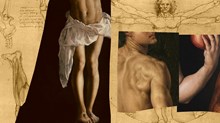
All of these thoughts can be summarized as a commitment to weakness rather than strength. "Muscular Christianity" and "robust faith" are views that worked well in modernity's concrete world, but the viability of Christian faith in the twenty-first century is not guaranteed by claims to power and declarations of strengths and doctrinal postures. This is not a slide into relativism but a commitment to nondogmatic specificity. We can tell the gospel story without resorting to competition, exclusivism, or elitism.
Barry Taylor teaches at Fuller Seminary in California, where he has developed a number of courses focusing on the intersections between theology and popular culture. He also teaches on advertising at the Art Center College of Design in Pasadena.
Used by permission of Baker Books, a division of Baker Publishing Group, copyright ? 2007. All rights to this material are reserved. Materials are not to be distributed to other web locations for retrieval, published in other media, or mirrored at other sites without written permission from Baker Publishing Group.
Posted by UrL Scaramanga on April 10, 2007

Comments
"Now faith is the assurance of things hoped for, the conviction of things not seen. For by it the people of old received their commendation" (Hebrews 11.1-2). For Professor Taylor to suggest that "We should consider letting go of our obsession with certainty" betrays not only an ignorance of the biblical understanding of faith, but also a profound lack of knowledge of history. Moreover, it illustrates a form of American spiritual myopia which is grievously offensive. Maybe Professor Taylor should ask the believers in the Sudan what they think of his proposal to "consider letting go of our obsession with certainty."
The "people of old" held onto their faith for precisely the reasons Taylor suggests we ought to let go of it. "Some were tortured, refusing to accept release, so that they might rise again to a better life. Others suffered mocking and flogging, and even chains and imprisonment. They were stoned, they were sawn in two, they were killed with the sword. They went about in skins of sheep and goats, destitute, afflicted, mistreated--of whom the world was not worthy--wandering about in deserts and mountains, and in dens and caves of the earth" (Hebrews 11.35b-38). How much better it would have been for these poor souls if they had just let go of their obsession with certainty! But no! They persevered to the end, refusing to "go with the flow" and "swim in the cultural waters." They insisted on their own "paddling pool" of something called living water.
"And all these, though commended through their faith, did not receive what was promised, since God had provided something better for us, that apart from us they should not be made perfect" (Hebrews 11.39-40). Herein lies Professor Taylor's most egregious offense. The "people of old" died in the hope of being raised to a better life in the fullness of time, along with all those who followed after them in the same faith and shared in the same hope. Taylor would have us abandon them and the faith for which they were willing to die, "the assurance of things hoped for, the conviction of things not seen," in favor of some new expression of "faith" which is little more than something we make up as we go along. What would become, then, of those who "apart from us. . .should not be made perfect?" Worse yet, what would become of us, apart from them?
Posted by: James Gibson at April 10, 2007
Hogwash! Tripe! The church is not in danger and never will be. Remember, "The gates of hell will NOT prevail..." People that push empty religious forms will find those threatened, but a daily encounter with the living God shared amongst fellow travellers never will be. What the post-modern world needs to see is what the world has always needed to see. People actually transformed by Christ, living as Christ commanded, caring not what it costs them. As long as there is Holy Spirit conviction poured out into this world, there will be daily those that are added. Barry and the emergent community need to get a grip!

Posted by: SLW at April 10, 2007
I agree entirely. It's funny how we Evangelicals claim to be informed by our Bibles and yet conveniently forget passages that tell us we "see through a glass darkly".
The enlightenment experiment provided the contextual pressure that led the western church towards a "muscular" and "foundational" view of our Faith. That shift in self-understanding cost us some very important aspects of our faith- mystery being perhaps the greatest casualty of all.
I think it is high time we return to a more humble, open-handed stance where we recognize that we are ever approaching God, yet never apprehending Him.
Posted by: Darren King at April 10, 2007
This excerpt is a little hard to follow, but it definitely resonates with what I have been feeling and discussing with some friends of mine over the years. Its not so much that we have to become weird mystical gurus. We just need to reframe our thinking and realize that in the grand story we know very little and that its good to not have all the answers. People don't come to church for answers. They come to be with others whom are trying to get close to God.
Posted by: Miracle at April 10, 2007
"Our declarations about matters of faith are ALWAYS fragmentary and provisional". Really?
Is 1 John 1:1 uncertain? "That which was from the beginning, which we have heard, which we have seen with our eyes, which we have looked at and our hands have touched—this we proclaim concerning the Word of life."
Is Acts 4:12 provisional? "And there is salvation in no one else; for there is no other name under heaven that has been given among men by which we must be saved."
Is the Nicene Creed fluid? "We believe in one God the Father Almighty, Maker of heaven and earth, and of all things visible and invisible...And in one Lord Jesus Christ, the only-begotten Son of God...And we believe in the Holy Spirit, the Lord and Giver of Life..."
These advocates of Emerging complain incessantly about being misunderstood, but refuse to speak in language that clarifies anything and insist in speaking in terms of "fluidity". I do not believe they are all necessarily heterodox, but they sure go to great lenghts to make the church safe for those who are.
Posted by: Dan at April 10, 2007
Here lies the ambiguity of this article. About what can be not be certain? God's existence? Salvation? The reliability of revelation? Eschatological options? nonessential theological issues? Let us be certain (oops there's that word again) that we can not know as God knows however scripture is full of examples that assure us of certainty but not omniscience. Lest I say too much I think much (but not all) of the Emerging movement is a just bad case of the cultural dog wagging the theological tail. Within the next five years we will see it institutionalize and become sectarian just like any other movement. But don't quote me on it!
Posted by: Harris at April 10, 2007
It seems to me that without our absolutes and dogma we end up in an agnostic state. I also believe that it is the only truly honest state a human can be in. (provided we drop the political/religious connotations of the word and focus on the bare, philosophical meaning.) None of us KNOW truth. We Christians make claims of revelation that can not be proven because they reside in out existential interpretive faculties. We believe x, y, and z to be true. We don’t know them to be. So what is so wrong with having the humility to present our gospel on those terms?
Actions speak louder than words, and much louder than doctrine. If we truly believe that a relationship with Christ will transform an individual into a Christlike person, we should have faith that their actions will change. It seems like a profound lack of faith is the motivating factor behind our religious institutions and structures. We feel a need to control the beliefs, attitudes, and behaviors of Christians. Why not leave that up to the transformative power of God? Why not drop the pretext that we have cornered the market on truth, and instead, humbly serve our enemies until they become our friends?
But nothing will change until we lose the power structure mentality of “church” as a man-made institution of controlled transformation. As long as we have church CEOs, marketing campaigns, and we continue to funnel the vast majority of our funds towards having our ridiculous buildings, we will continue to have our eyes fixed on the kingdom of earth.
I think the ultimate question is this: Do we believe it is the power of doctrine that advances the Kingdom of Heaven, or the power of Christ? If doctrine is a necessary component then we are hopelessly lost in a sea of relativity. (Compare the doctrine of the 100 top churches to sea the countless contradictions) If it is Christ alone than we are still in a sea of relativity, but with the hope of a Savior to guide individuals into loving action.
Posted by: Josh Foreman at April 10, 2007
The author quotes Christopher Partridge where he wrote:
“The new spiritual awakening makes use of thought-forms, ideas and practices, which are not at all alien to the majority of Westerners. They emerge from an essentially non-Christian religio-cultural milieu, a milieu that both resources and is resourced by popular culture.”
While as Christians we can make our story available to people who seek spiritual awakening we can be by no means assured that ours is the faith they will find. People inspired to spiritual awakening by popular culture now have more modern choices from which to choose. The Jedi religion garnered over 500,000 followers on worldwide censuses and Matrixism has been now been made from The Matrix another pop culture phenomenon.
The numbers of people claiming to be pagan have also grown significantly. Will something like the Harry Potter books/films lead more people to Christianity or Paganism as a form of spirituality. I wonder.
Posted by: JohnB at April 10, 2007
Every time I hear the term "emergent" it sounds increasingly like the scripture denying liberal church.
The problem is that scripture is hard... It is hard to study well (but we are commanded to do so), and it is hard to follow God's way, outlined in scripture. Emergents seem to want the "easy" way, but that way, according to "not so fluid" scriptures, is the way to destruction.
I'm not real satisfied with the Church in America, but frankly, the so-called "emergent" church is just liberalism in another set of clothes, if indeed, there are any clothes at all...
Perhaps the emperor is naked...
Posted by: Jim at April 10, 2007
People, please slow down enough to actually digest what you are reading.
To the person who wrote: "Hogwash! Tripe! The church is not in danger and never will be. Remember, "The gates of hell will NOT prevail..."
Barry is questioning the Christian religion- as an institution. The enduring nature of what the Eastern Orthodox call "the invisible body of Christ" is another thing entirely. It is this invisible body of Jesus, made up of believers from across the globe, that we are promised the gates of hell will not prevail against.
Posted by: Darren King at April 10, 2007
I only ask two questions of Dr. Taylor. How much of the certainty of our faith must we let go of in order to reach a generation whose only hallmark is a rejection absolutes? Secondly, When we have let go of those certainties will we still have a biblical faith?
Posted by: Ron at April 10, 2007
The Emerging Church is a small movement. So why is it getting all this attention?I do not misunderstand it. It is the old Liberalism dressed in Evangelical clothing. Evangelicalism is becoming somewhat more successful. Successful religious movements have historically compromised with culture. Evangelical churches and institutions must resist adopting the "Christ of culture" of the Emerging Church, but not react by being "Christ against culture" fundamentalists. We must maintain the NAE style "Christ the transformer of culture" stance. We are making progress. Yes, their are alot of tares, but we are growing a large crop of wheat! Look at the Purpose Driven movement. Consider that Evangelicals, along with conservative Catholics cannot be ignored in politics, as they were a few decades ago. Look at the increased number of maga-churches. What about the church planting movement? Notice that mainline churches which preach an uncertain gospel are dying. So will the Emerging Churches when people find that their trumpet gives an uncertain sound. I will agree that there is room for chairty on historic denominational distinctives, and escatology will all "pan out" in the end. This, however, calls for no new fluidity about the core of the faith. Let our trumpet give a certain sound.
Les Coomer
Posted by: Les Coomer at April 10, 2007
This puts emergents way out on a limb, one that is tenuous at best. I am an emergent, but not near to this extent.
Why are we questioning the spiritual foundations of the church (God'd Bride I might add) and not the way we "do" church?
Old forms and functions and paradigms need to be questioned and validated against the Gospel. The church needs to reach out and provide the faith spoken of in Hebrews 11 and provide the stability that Barry says we need to forgo...hogwash.
When the church looses itself so much that it no longer can say it is built upon the Rock of Christ, the Rock of Ages, we are all but lost.
Posted by: Carl Holmes at April 10, 2007
It's amazing how Western Americanized Christianity tries to break everything down to logical and rational reasoning.
So now everyone is going to go with the emergant church "system" because it's become theologically acceptable and culturally viable form of Christianity.
Few consider and make decisions according to the moving of the Holy Spirit and His working to bring about the will of the Lord on the earth and in the church.
Posted by: Kris Couchey at April 10, 2007
I find the negative responses to Taylor's book both amusing and frustrating. The responses are so typical of the reaction evoked by all of God''s prophets throughout the ages, from Old Testament Scriptures onward.
Taylor is right on, but fear of uncertainty deprives some of grasping his vision. He's not calling for a moratorium on biblical truth; rather he is calling us back to it. The problem is that some have trouble making the distinction between God's truth and man's traditions. Those traditions have, in many ways, emasculated God's truth and rendered it irrelevant and archaic in today's world, largely because churchmen refuse to allow Truth to be applicable outside of their religious hierarchies, lest they lose control--as if God and His Church actually depended on them.
What Taylor is advocating is the very thing that will ultimately preserve the Church so that "The Gates of Hell shall not prevail over it." It's time to stop kicking against the pricks and stop grieving the Spirit before the forces of man's religion finally squelch what few sparks of true faith remain in God's Church. Faith has never thrived on certainty; every revival eventually died because of man's propensity for recreating Towers of Babel to replace the work of the Holy Spirit.
But alas, if God children are not willing to get out from behind the ivory walls of institutionalism and become part of what God is actually doing out there in the land of uncertainty; in the gutters of hopelessness and despair, where the need for God's love, mercy and faith are imminent, they will never understand what folks like Barry Taylor are trying to say to them, regardless whether they are traditionalists or emergents. Whether we are part of the solution or part of the problem is up to us. But one thing is certain; if we don't see the problem with church-as -usual, we can rest assured that we are part of the problem.
Posted by: J.W. at April 10, 2007
you know, i am not a big fan of some of the emergent stuff. but i am not a fan of many of the alternatives either. but i resonate with the idea of letting go of certainty.
i still believe much or most of what the creeds and confessions teach. but i have a hard time saying that i am certain of their truth.
this is nothing new. kant at the tail end of the enlightenment said similar things about faith and reason. i don't recall him using the passage about seeing through a glass darkly but he did critique the enlightenment's confidence in itself to know all things completely. there is always a point at which certainty leaves us and we are left with faith only.
why is this so frightening to folks?
Posted by: mike at April 10, 2007
For me, I don't feel like my faith is threatened at all when I consider the possiblity that the institutional church may dissapear. I would still follow Jesus and I would still have my friends/family in Christ.
But to be honest, I doubt that the institutional church will dissapear just change significantly.
Posted by: Carl at April 10, 2007
Guys, why don't we stop arguing? Everyone knows that the author didn't mean we should question the trinity, creation, or anything like that. They meant we should question the church, and the fact that we have to promote ourselves and become a big business in order to be successful. If everyone were to just follow the simple teachings of Jesus and scripture, we could see the value of obedience and simplicity rather than the complicated mess we're making here.
Let's not argue about things like this, but actually consider what the author was trying to say. Sure, the fact that you can point out theological errors might mean you know more than the writer...who cares? I can point out a theological error in your argument-don't judge one another.
All I'm saying is we should have an intellectual discussion about it instead of trying to prove people wrong. I'm guilty of it myself but I'm sick of it. If you think the church is fine the way it is, great! If you think it needs to change, that's great too! Whoever is right will win in the end. But that doesn't matter. What does matter is not becoming divided and argumentative so that people don't want to join christianity. If we can do that, we know we won't have any more problems.
Posted by: Chris at April 10, 2007
With Easter just a few days ago I saw many commercials, billboards, etc. for services. Many were terrible as if the churches had a product to sell through a massive production. So, I resonate with Taylor's cry against this form commercialism. Taylor concludes, "We can tell the gospel story without resorting to competition, exclusivism, or elitism." I think this was his main point, of having a faith that is not trapped in a man-made institution, but one that can be expressed through loving our neighbor in a world thirsty for someone to listen and not have to sell them something.
Posted by: LF at April 11, 2007
Barry Taylor states: "The future of Christian faith lies in its ability to inhabit this gray world, not attempting to “sort it out” as much as to be available to help others navigate and negotiate the complexities that such a dynamic raises."
Based on that statement, what gives the Christian faith the ability or authority to do any more than confuse those who are already lost? How shall we navigate without a map or sextant? If the Bible has no real authority in my own life, how can we suggest that it might in the life of someone else...that it has more authority than the Quoran or the Book of Mormon? Do we not become the blind leading the blind?
On a more personal note...
In the midst of all the Emergent moves to deconstruct "Muscular Christianity" and to move to something that is more congruent to our culture today, my question is this:
What will be left for my grandchildren to deconstruct?
Kat
Posted by: Kat at April 11, 2007
It is interesting to see how threatening questions seem to be for some of the readers of this blog. Asking the questions, and sometimes living with the questions, is more an act of faith than rehasing and repeating the same lines over and over.
In my experience, as my theology moved more toward the left, I found that I started to take Scripture more seriously, because I wanted to allow it to speak to me, rather than force it into my already defined boxes. Isn't that what we are talking about here?
Those outside of the church are likely to be more attracted to our honesty than our certainty. The gospel passage for Maundy Thursday was the story of Jesus washing the feet of his disciples and issuing the new command to love as he has loved us. That love is to be the defining mark of disciples. Not the right beliefs, the right stands on issues, just the right way to relate to people. When we know that we are really loved and are willing to really love others, a safe place is created for questions and searching, even if certainty remains elusive.
Posted by: Doug at April 11, 2007
Josh Foreman wrote:
The problem is, the Gospel is not "ours" to present on those terms, which are more akin to Pontius Pilate ("What is truth?") than to Jesus Christ ("You shall know the truth and the truth shall make you free"). If you do not KNOW the truth, then you are not free to present the Gospel as mere opinion. Such would be the height of human arrogance. To KNOW the truth, as revealed and embodied in Jesus Christ, is to be constrained to share it out of humble obedience to the One who has bought your redemption with his own blood.
Posted by: James Gibson at April 11, 2007
i am not sure that when the word jesus uses that we translate in english as "know" means what you are asserting.
i think it is more akin to relational, existential knowing than rational/emperical knowing.
and yes it isn't "ours" in that we own the gospel. but it is "ours" in that it is the gospel we believe, as opposed to alternative forms of that gospel, or other belief systems.
josh is right and he is backed up by minds like Kant and Barth who also did not believe that we could "know" with certainty but we can "know" in a relational existential way.
Posted by: mike at April 12, 2007
To James Gibson's last comment, I can only say that throughout the ages there have been probably millions of instances where the Truth did not set people free, but was instead used to enslave, control, manipulate and even to kill. I am not saying that as one who does not subscribe to the authority of the Scriptures, but as one who most certainly does. But there is much revelation today that is finally putting to rest some of the gross misinterpretations many of us have held as truth. Much of that revelation is coming from the missional paradigm. Why? Because at last Christians are realizing that God's Word best makes sense when applied to the way we relate to the totality of life as opposed to the reductionist view of relegating one's time with God to a couple of hours a week religious observance. How any Jesus-follower can't get excited about the prospects of such revelation, and moreover, seek to undermine it, escapes me.
Posted by: J.W. at April 12, 2007
Barry seems to be suggesting that "church" as we know it may cease to exist and that makes some, including myself, a little uneasy. But as I survey the landscape of "Christendom" as it now exist, I think he is dead-on. Many churches won't survive much longer unless they make pretty radical changes that they may not be capable of making at this point. I wrote a post about this a while back that you can read if you like and in fact my blog discusses these kinds of things. The ship we are currently sailing is taking on water fast and we need a new ship more adept for sailing the postmodern sea we now find ourselves on. (The problem is right now that "new ship" is still in drydock being constructed -- we waited a long time to even start building.) I think it is important we distinguish "church" from the "Kingdom of God". The former changes and evolves over time -- it has for 2000 years -- but the latter transcends any particular church and is eternal.
I do not personally think emergents claim that what they are proposing is somehow new and innovative. In fact, they often encourage a return to ancient practices that the church has used for centuries -- the ancient/future approach. They are simply suggesting what is obvious -- "church" as we do it now in the West does not seem to work and is not succeeding in helping us live out our calling as the church -- making disciples for Jesus and teaching them to do the things he did. They're trying to offer some alternatives that might be more attractive to the culture we now live in and make a few more disciples for Jesus along the way. If you've grown up in church your whole life as I have, some of what they propose may seem a bit radical, but radical may be what we need right now. Remember people thought Jesus was pretty radical too. extreme as well.
Posted by: Alan at April 12, 2007
I fail to see how the only two alternatives that face us are to swim with the cultural flow (which Barry recommends) or to paddle around in our own little pool (which he does not). It is true that too many Christians are content to remain trapped within thir own little ghettoes - speaking witin their own communities a language that would not be understood by anyone who ventured in from the outside. Nevertheless the Biblical alternative to this is not to surrender the non-negotiables of the gospel, and just sing and swing to whatever tunes happen to beplaying outside.What happened to the principle of being salt and light? What happene to Paul's words in Ephesians "have nothing to do with the fruitless deeds of darkness, but raher expose them", or in Romans 12 "Do not conform to the pattern of this world but be transformed by the renewing of your mind"?How can we do this if we are following the flow? Sometimes we are so concerned with being relevant that we are emptied of substance. We end up connecting with the people of this world, but we have no longer have anything meaningful to connect them to!
Posted by: Roger Marshall at April 13, 2007
What a delightful treatise, it could be retitled the Episcopal Church Manifesto!
Regardless of what Mr. Taylor says in the last paragraph, "This is not a slide into relativism but a commitment to nondogmatic (sic) specificity." That is exactly what it is.
It is license to reinterpret the Gospel, the Epistles, and the whole Bible as society sees fit. It will let you go from being "in the world but not of the world" to becoming "of the world" too! What an opportunity!
It is the blue print for the deterioration of the Episcopal Church over the last 35 years. If you don't believe me or agree with my opinion, fine, but do this for yourself -- Google the name "Paul Tillich."
If you read Paul Tillich's biography you will discover how his theology was forged behind the lines WWI when the primary duty of German Army chaplains was to dig graves. The theology of Paul Tillich is the basis for what Mr. Taylor writes and for what has happened to the Episcopal Church and what is happening in other "mainline" denominations. Be warned.
Posted by: Basil at April 13, 2007
I think Roger’s post illustrates how these two sides are talking past each other.
He says, “the Biblical alternative to this is not to surrender the non-negotiables of the gospel…” But I don’t see that being proposed. I see a different attitude towards them. I understand and know Christ and His story, and it becomes my gospel because I can tell people about how it has changed the story of my life. I’m not holding these FACTS out as a litmus test and telling them they must believe X,Y and Z to be saved. I’m telling them that my belief in X,Y and Z changed me and I think it will change them too.
Roger says, “What happened to the principle of being salt and light?” But I don’t see any proposals to hide our light or stop being flavorful. It seems just the opposite to me. The proposal is to stop consolidating all the light and salt in warehouses called church buildings, and start spreading it around in a relational way rather than an informational/advertising campaign way.
Roger says, “Sometimes we are so concerned with being relevant that we are emptied of substance.” As if the modern church is not emptied of substance with it’s business structure and seeker sensitivity that boils down to telling people what they want to hear. Is ‘5 Bible steps to more wealth’ or ‘Paul’s secret to business success’ (yes, I’m slightly exaggerating to make a point) really substantive? The question is what kind of ‘substance’ do we want to have? Informational or relational? Does knowing a litany of facts save you? Or is it a relationship?
Then Roger drops this little insult: “We end up connecting with the people of this world, but we have no longer have anything meaningful to connect them to!” Nothing to connect them to? Is Christ nothing? Do I need a building and a list of dogma to complete Christ?
Posted by: Josh Foreman at April 13, 2007
I agree that we must, in great humility, admit how much we have yet to learn of the Father's love. I also agree that we must approach those outside the faith with love and grace rather than harsh condemnation.
However, I must disagree with the attack on the Church as an institution. The flock groups together for mutual edification, and the flock has shepherds, leaders - this is no more and no less than what the Epistles call for. The Church is not optional. To love God is to love the body of Christ. The Church should indeed cease to attempt to market herself - but only so that she may better feed the sheep with nourishing food.
I must also draw issue with the epistemological implications of this article. The purpose of inquiry is to come to the truth - and truth there is, though it is viewed through a dark glass. Christianity tells the fullest story possible about the human experience, drawing all of life into a coherent narrative, better than any other philosophical story can do. The religion of Jesus, God's son, is indeed a robust faith.
Posted by: Tim Roy at April 13, 2007
"The enlightenment experiment provided the contextual pressure that led the western church towards a "muscular" and "foundational" view of our Faith. That shift in self-understanding cost us some very important aspects of our faith- mystery being perhaps the greatest casualty of all."
I'm not sure what to make of this. If you are offering an historical account, then you are a practicing foundationalist, since you are offering a theory that you believe corresponds to reality. On the other hand, if you are not, then we can safely ignore it without fear of believing a falsehood.
The problem is the suggestion that one must equate "rationality" with the "Enlightenment," which is the one thing that modernists and postmodernists have in common: the former accept it and the latter reject it. However, there is a third option, a fuller understanding of rationality, one defended by Thomas Aquinas, JP II, and Pope Benedict XVI. Here you have mystery and rationality, faith and reason, in full complement.
Posted by: Francis Beckwith at April 17, 2007
My problem with this entire conversation is, no one is honest about what it is that we are to be "fluid" about. It is the virgin birth? How about the authenticity of the scriptures? Or the Lordship of Jesus? Or the "doctrine" of holy living? What about heaven or hell? Or atonement through the blood of Jesus alone? You see, the emergent position is no position at all because it leaves averything up to the individual!
I have no problem re-thinking the methods and even the emphesis of ministry, but the foundational truths of the Bible can never be "fluid." This is what make Christianity unique. Truth outlasts cultural transition!
There has to be some Non Negotiable Doctrines that are the foundations of our "faith." Without foundations, there can be no true faith, only deception.
Harris in response adds: "I think the ultimate question is this: Do we believe it is the power of doctrine that advances the Kingdom of Heaven, or the power of Christ? If doctrine is a necessary component then we are hopelessly lost in a sea of relativity. (Compare the doctrine of the 100 top churches to see the countless contradictions) If it is Christ alone then we are still in a sea of relativity, but with the hope of a Savior to guide individuals into loving action."
My friend without doctrine (simply what you believe) there is no means of guidence. Without doctrine, why follow Jesus at all, if there is no heaven, hell, judgement, moral code, no true and only God, why bother? Let's party! See, it is impossible to have "fluid" doctrine and have any type of moral compass. Jesus was the only who said, "you can't call me Lord unless you do what I say..." It is impossible to separate the person of Jesus from the principles Jesus taught, and Jesus said real dogmatic things such as "...I am the way, the truth, and the light. No man comes to the Father except through me..." He also said, "...my word is truth..." Either the Bible is the absolute source of spiritual truth or it is full of lies and mistruths! You can't have it both ways!
This seems to be just another attempt of liberal thinkers (some would say,"non-thinkers") who produce dogmas that have symbols without substance! This position, or better yet, non-position is so ambiguous that there no certainity at all. This provides no comfort, security or foundation for faith and will destroy the church not build it!
Posted by: Tim at October 10, 2007