If you like our blog,
check out the journal!

Subscribe to Leadership Journal

Save 21%


twitter updates


    Seminary &
    Grad School Guide
    Search by Name


    Or use Advanced Search to search by major, region, cost, affiliation, enrollment, more!


    blogs we're watching


    books we're reading


    « Willow Creek Repents? (Part 2) | Main | Missions and Masturbation »

    October 29, 2007

    Squelched by Marriage

    Have I nurtured my spouse's personality, or buried it?

    When I get home tonight, I'll think awhile about Gordon MacDonald's new column. In fact, I think most pastors and leaders should think hard on his thesis: What has the dominant, big-personality, leader type squelched in his spouse? I may muster the courage to ask my wife what she thinks about it.

    Those of us who have spent our lives getting close to people for pastoral reasons are quite well acquainted with the grief that floods the life of one who has lost a dearly loved spouse. We've observed the paralyzing sadness and sense of loss and know that only time will dull the pain. There are a plethora of books and seminars that speak about this experience.

    What is less talked or written about is the opposite of such grief. The word that comes to me is liberation. In some cases the death of a spouse actually liberates the surviving spouse to remove something like a disguise and become a new person.

    I once stood near enough to overhear a conversation between a woman and two of her adult children soon after the funeral and burial services for her husband (and their father) had concluded. Apparently, either the son or the daughter, thinking they were offering a kind of protective love to the mother, tried to take charge and tell her something that she should or shouldn't do.

    The mother (freshly a widow, remember!) reacted with words wrapped in anger. "Now let's get something straight right this minute. No one! No one is going to tell me what to do any longer. I've been doing what everyone else wanted (alluding no doubt to her deceased husband) for fifty years. Now it's my turn. I'll make my own decisions from here on out. Is this understood?" I had the feeling these words has been rehearsed and that it was only a matter of time until they came out. Now they did.

    They came from a small-statured woman who had always seemed content to live as a loving and serving wife in the shadow of her more-dominating husband. As far as I could tell she had always seemed happy with her marriage arrangements. Now I had some doubt.

    More than a few times, I have seen surviving spouses who - soon after a period of mourning - seem to change dramatically. They buy new clothes, begin to travel (or stop traveling), redecorate their home, join organizations or find new ways to make money. They deepen spiritually or (and this shouldn't surprise) do just the opposite. Anyway, a new person emerges. A new person? Or the hidden one?

    What I have learned from watching episodes like this is that many people apparently harbor a secret person inside of themselves that never sees the light of day. That hidden "person" is intimidated or refused by someone near who controls all the airspace of the relationship.

    Someone, by the way, will point out that this is most certainly true in many acrimonious divorces. Terminate the relationship and you have no idea what new person may emerge.

    Of course there is a corollary to all of this for which I do not have space except to mention. Sometimes the survivor goes into a kind of character or spiritual disintegration and you realize that what they were was being propped up or held together by the one who had just passed on. This scenario is not pretty.

    Having seen one more of these hidden persons emerge in just the past few months, I was pressed to engage in some reflective thinking about my own marriage. Could there ever be such a person hiding in my wife, Gail? Someone that I have refused to recognize and welcome over the years of our marriage? Put another way: is this woman whom I dearly love everything she is capable of being partly through my encouragement and affirmation? Or - and this is hard to write - would my departure be that "person's" liberation? I'd like to think that the answer is a resounding "no!" There is nothing in Gail that needs to hide. Nevertheless, it is a question worth asking myself (no matter how morose) so that I can be the more sure that I have encouraged her (as well as all my friends) to be all that God meant her (and them) to be.


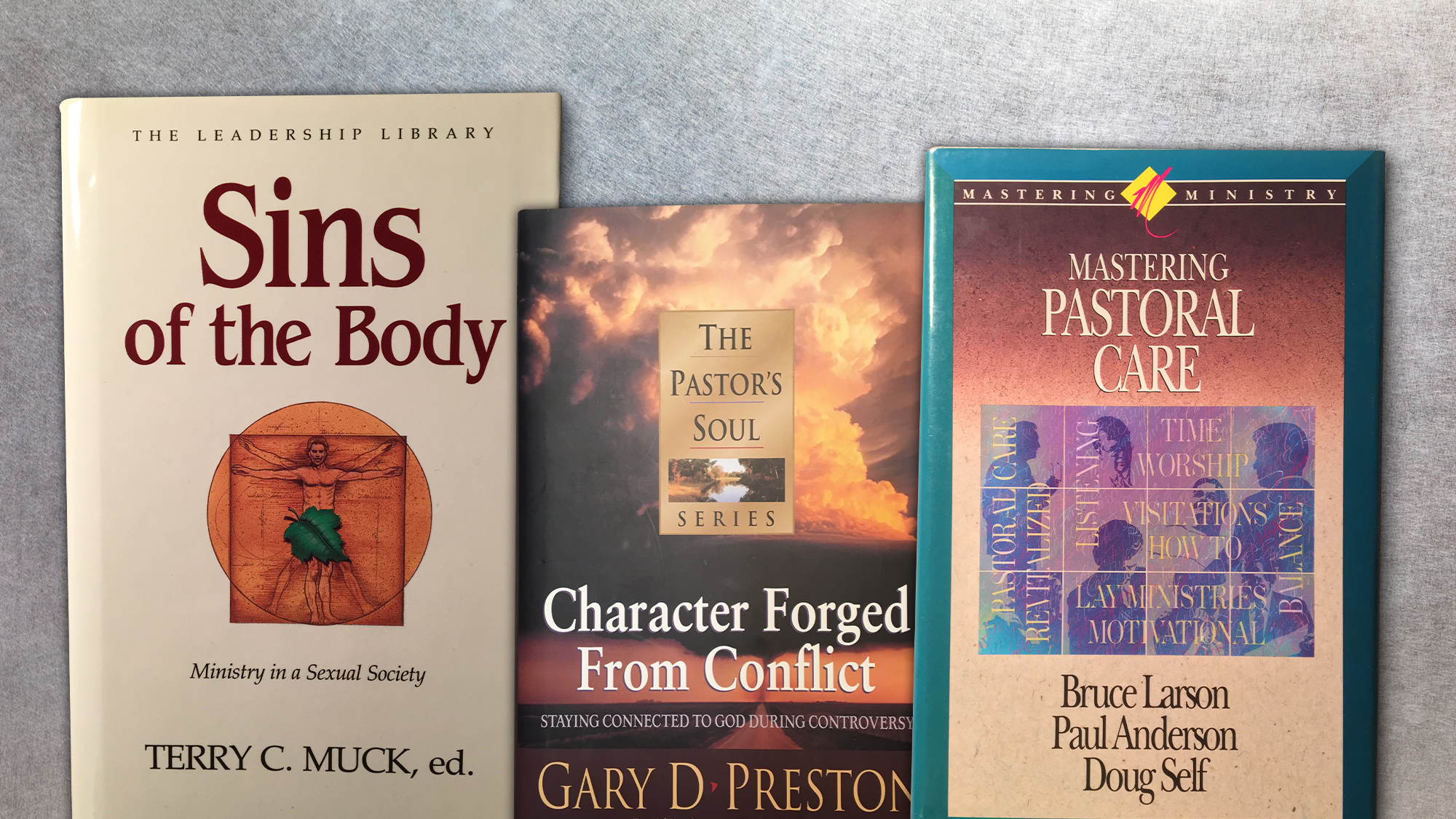
    A wonderful read: Jonathan Aitken's John Newton (Crossway, 2007) is a marvelous biography. I'll never sing again Amazing Grace without remembering the power of Christian conversion as it was so remarkably evidenced in Newton's life. Before Aitken's book, I thought I'd covered the bases on John Newton. Not so. He's a fresh new hero to me now.

    An irritating read: Jim and Casper Go to Church, by Jim Henderson and Matt Casper (BarnaBooks, 2007). A brilliant idea for a book. Two guys (one an out-of-the-closet-atheist) visit various well-known churches in America at worship time. The atheist, Casper, offers the Christian, Jim, a fresh-eyed view of what he is seeing as people gather and sing and listen to sermons. I guess I'm glad they didn't come anywhere near where I preach - although I probably would have learned a lot.

    I wish the book could be rewritten with an eye toward more depth in the subject matter. There weren't a lot of surprises about what one might experience if he visits a congregation at worship for the first time. Still, the value of the book was in its reminder that some things done in church must seem pretty bizarre to the critic who stands outside the faith.

    The price of the book is in the question that Casper asks Jim several times after leaving various churches to which they have traveled. "Is this really what Jesus told you guys to do?" Casper seems incredulous.

    A prayer request. This was a wonderful weekend in New England: the foliage remains brilliant; the Red Sox won the World Series; the Patriots are undefeated; and Boston College is number two in the nation. We need humility. Right now it's a spiritual battle for all of us. A spiritual battle I would be happy to entertain into the foreseeable future.

    Gordon MacDonald is
    Leadership's editor at large

    Posted by UrL Scaramanga on October 29, 2007


    Comments

    I think it is the wise wife who loves her husband so much that she refuses to see her husband as a fool, even in small matters (but added up do matter). Thus, she breaks the silence and speaks truth to her lover (much as Shara Weslesy did to John?). Trying to see your true self is like trying to see your own eyeballs -- you don't. Since my wife has an excellent brain and human sense I seek to listen, even if it hurts (and it has often been so).

    Posted by: Charles T. Smith at October 30, 2007

    I dunno... If my wife died, I'd probably buy a motorcycle, but I'd really rather have my wife. It's not that I have a deep-seated need for a bike that she's squelching, it's just that I have her to look after and there's no reason to go blowing money on toys.

    Sure, each spouse has to make concessions to the other. Part of being married. But if one dies, there's no reason not to just act like a single person again.

    Posted by: John M. at October 30, 2007

    Great thoughts. Thanks for bringing the Gordon MacDonald piece to our attention.

    Posted by: Matt Dabbs at October 30, 2007

    I am a faithful wife of one husband for 37 years, mother of 5, grandmother of 6, daughter of a living mother. My high maintenance family on all levels and in all ways seemed to keep me from the calling on my life. As I agonized how not to miss God and not be bitter or resentful I was impressed to submit to a higher power. It was not giving in to somebodies idea of excellent appropriate care of my family. It was giving in to the will of God. Now, looking back it becomes so clear that timing brings a ripeness in me. All those years of doing small things right and good to the glory of God were worth it all. The richness of what God is doing through me is humbling. It might be a short time that I faithfully give outside my normal one on one but it will be an acceptable gift to God. I received His life and I gave Him my life...without reserve. But working out the middle was a lot of effort to the point of exhaustion but here I am.

    Posted by: Carla Jo Novotny at October 30, 2007

    As a 22 year old who has never been married or in a serious relationship this whole issue is becoming more mportant to me. Having seen very recently what being so self centered and dominating can do to a marriage, a family and a church, I've begun to question how I can possibly fulfill my oblgation to a my spouse. Now I've come to realize that in reality, I'll never be able to do it perfectly. I'm starting to understand the idea of leaving one's parents to unite with a husband or wife and what a truly challenging and difficult concept that is. It brings me great comfort to know that people, especially men, who have been married for years still struggle with this issue.

    Posted by: Chris G. at October 31, 2007

    In our family, I am the pastor. My husband fixes breakfast, does the dishes and cleans when company is coming. He does this because it frees me to be a pastor. He tells me when he can't do his share because of his commitments.

    We share equally in household chores and the tasks of daily life. We both work- but I put in a lot more hours than he does.

    I do not know why sharing life as equals is so unusual. Whever one partnder is "dominant" or has a "dominant personality"
    this is a recipe for emotional or hidden physical abuse and worse.

    If one of the partners sees the death of the other as "liberating" this is NOT a healthy relationship.

    It takes a lifetime to work this out. We have been married for 40 years and our lives have evolved. I pray that yours will, as well.

    Posted by: Allison Milligan at October 31, 2007

    In our family, I am the spouse and I am the husband. The original post seems to almost assume that it would always be the wife who is the "pastor's spouse". Clearly, my response and the post prior to this reminds us that this isn't always the case.

    The previous post said: "I do not know why sharing life as equals is so unusual. Whever one partner is "dominant" or has a "dominant personality" this is a recipe for emotional or hidden physical abuse and worse."

    I agree. My wife and I try and share the load at home. I do pick up "domestic chores" sometimes to free her up to do other things, but then other times she does things to free me up. My job is a lot more 9-5 while my wife often as to work at night, so I end up putting our son to bed many nights, but then there are some nights she takes care of it.

    My wife discovered her call to ministry as a single person and then proceeded to get married and have children. Now we are working out the balance between ministry and family. It's not necessarily easy but it's good.

    Posted by: Alan at October 31, 2007

    When the death of a spouse is liberating, it clearly does suggest that the relationship was not healthy in any sense. Such situations should serve as a reminder for every spouse to make sure they are treating their mates in a godly fashion, and allowing them to be the people God has created and called them to be, not to force them into an artificial or selfish mold where they become a slave in the relationship. Thanks for the post, it is a good reminder to do my part in encouraging my wife to be the woman God has called her to be.

    Thanks,
    Kevin

    Posted by: Kevin Derr at November 2, 2007

    John M.,

    It's not just the toys, the concessions or wanting to be single again. I think that Mr. MacDonald is speaking to something much deeper than "being one", "loving your neighbor (your spouse) as yourself", making selfless decisions. All of these things are good, biblical. Being selfless often requires sacrifice on the part of the spouse, and selflessness does not throw pity parties. Selflessness does not act the part of the martyr. Good marriages (I believe) are comprised of two mostly selfless people. Complete selflessness is impossible, being human. But it's our aim in marriage, to treat the other as though they are us, our own flesh.

    Speaking as the oppressed spouse, I was for many years living as a hidden person. My husband is a dominant personality, godly in many ways, but he was also selfish. For years I thought that I was supposed to continue to be selfless, allowing him to be selfish. And I was just as guilty as he, not bringing the pain of oppression to his attention, acting like a martyr, throwing pity parties and believing that my "selflessness" made me more godly than he. We were both at fault.

    Things are different now, thanks to the work of the Holy Spirit in both our lives. I'll admit, my husband has done most of the changing, recognizing his selfishness, how it has hurt not just me but our children, giving Christ control in areas he'd previously held onto. But I had to give up the role of martyr, my right to anger, my trust. I had to start praying for my husband and trust God to change him, stop trying on my own.

    What I'm trying to say, I guess, is that, to look at this as the problem of a dominant, squashing husband is one-sided. Since the change began to happen in both of us, many women in oppressive marriages have crossed my path. Most are bitter, martyrs themselves. And when we look at marriage as a relationship just for our own benefit, not for our spouse's, that's what we become. And we hide our personality.

    Please, let me be clear. I understand the agony of being an oppressed wife. I'm not in any way, shape or form condoning overbearing husbands. I just know that I had the responsibility of dying to myself, and that wasn't what I'd always thought it to be. It wasn't serving him, washing his clothes, always being subservient. It was giving up my right to be hurt and angry. Sometimes it looked selfish, when I refused to do things that were painful or wrong, instead letting him know it hurt. Often it was making my anger known in love instead of holding it in. Sometimes it was doing things for me.

    That said, the changes that have occurred, the last year in particular, have allowed me to be the person God is calling me to be. I started grad school last week, my energy levels are up, I actually wear makeup consistently. Little things and big. God has been kind and generous, giving both my husband and myself a second chance at married life, unlike those who become themselves after the death of a spouse. I really am grateful.

    Posted by: Flea at November 2, 2007

    I'm not sure the negative take on the new spouse emerging is always correct. When we marry, we become one flesh and as Christians die to ourselves. That being true, there is a lot of giving and compromise that takes place. Both spouses likely feel that some part of their personality is squelched in order to live together.

    Over the years this changes. Ask any young mother if she is able to fully express her creativity for example, or what her hobbies are. Ask any father of young kids. Both will probably say, I have no time for that. This doesn't mean that having kids has squelched their personalities.

    I can fully understand the widow not wanting to be told what to do by her children. That doesn't mean she felt oppressed by her husband. It just means that she recognized that she would have to fill the void left behind herself rather than let the kids fill it.

    Obviously our relationships change us. I am not the same person I would be if I were not married or had married someone else. The same goes for my husband. If I am widowed that will change me too. What would really surprise me is if someone remained exactly the same after such life changes.

    Posted by: Chris at November 3, 2007

    Unfortunately the Church needs to look long and hard at itself. The model set out for women even in the most liberal churches is often stiffling. God has created each of us in His own image and there will only be one of "me" who walks this earth. I (and you) are gifts to all of us here at this time and this place for His Kingdom. Any oppression of each other is a sin. Each of us should be watching for the other to protect God's vision for that person's live-not your vision.

    Posted by: trisha at November 3, 2007

    Flea, I recognize that your marriage must have gone through a season that was deeply upsetting to you. However, I'm trying to understand exactly what mode of opression your husband was displaying, and how your martyrdom was manifested. Was he denying you something that he did not deny himself? Forcing you to abstain from harmlesss activities you endjoyed? Treating you in a dictatorial fashion? Witholding love?

    Forgive me, but given the vagueness of your language, I cannot help but wonder if the opression you speak of was merely insufficient mindreading capability.

    Posted by: John M. at November 6, 2007

    Sorry, John. I'm not always clear when I'm passionate about something, unfortunately.

    My husband had an addiction of which I was unaware. Confessing that (to other men, as well as to me) was a beginning, but there was still a great deal of selfishness, buying things for himself but demanding an accounting of everything I spent. And yes, asking me to give up activities I enjoyed, frowning on healthy friendships. Actually, I think that that is probably a strong indication that something is wrong. Many of the women I know who have been in oppressive relationships haven't been allowed to have close friends, anyone other than family. Some may look as though they have friends, but no one is allowed close. Healthy marriages include friends for each partner, people who are allowed to get close, know much of the family dynamic.

    My martyrdom was manifested as a servant/slave. I stopped asking for things for myself. I stopped asking not just for things, but for attention and affection. In my own head I began to tell myself that I was better than him because I was "selfless". I began to make much of being frugal, while it was a cover for my inability to ask for nice things. Really, I started to think I didn't deserve anything nice. And I felt very, very sorry for myself. It hindered my relationship with God, feeling sorry for me instead of praying for my marriage. It didn't help that I wasn't doing things that I knew were right instead of what was easy (avoiding conflict, giving in to the anger and criticism, being someone other than me).

    This is really a touchy subject for me. I'm sorry if I'm still not clear. I'm not attacking anyone, honestly, just trying to clarify what the oppressed spouse would look like, factors which play to that kind of relationship, the fault which may occur on both sides, some of the warning signs (lack of close friends. Thanks for your patience.

    Posted by: Flea at November 6, 2007

    This is a very thought provoking topic and one that would benefit every spouse to consider. As a husband of 25 years I am inspired by the very thought of my wife not being all she can be by some oppression on my part. Inspired to be a better mate. I desire to be the most nurturing husband I can be but fall short more than I care to admit. What a sad thought that your spouse would be liberated somehow at your death. We all should be motivated by the very notion.

    Posted by: Garry Patterson at November 9, 2007

    After reading everyones comments a situation comes to my mind. I would like to get other readers opinions on this. What should the actions be of a pastor, leader whether male/female who is not allowed to communicate, embrace or invite members to fellowhship with them. Leaders who must fire staff/members that the spouse does not like without having reason at all, just because the spouse does not "like" a person.
    The spouse holds the other to marriage vows of "not putting anyone before him/her." Is that God's idea of marraige? A leader or pastor in the church cannot allow someone to serve or participate in church meetings because the spouse will withhold money, sex or communication from the other. How does that reflect God's purpose for marriage? I have heard people state that if the spouse is uncomfortable then everyone else must be cut for the benefit of the marriage partnership. Is there any basis for this in scripture? Not only are the members squelched but so is the leader/pastor of the church by marriage.

    Posted by: Jessica at November 14, 2007

    I am relieved to hear that it is not just me who looks forward to the day when I will be free. My successful pastor husband does take up all the breathing space in our marriage. I have talked and tried to reason with him to no avail. He may give me space for a day or two, but then it's right back to my pretending. I pretend all the time. I smile when I attend meetings with him, I try to act interested when he talks non-stop about his work, even though I've told him many times that I do not like to hear all the details. I wouldn't mind hearing about some things, or helping him work through situations, which does occasionally happen. I feel God has called me to certain ministries, but when he is through taking all the space in the relationship, I have little energy to do what I think God has gifted me to do. The children are becoming independent and need me less, so husband thinks he can dump more on me.
    I love it when he travels and then I have some freedom, but it may be making it harder when he returns. I have my girlfriends that I can talk to about this, thank God. I'm on medication for depression and will probably go back to counseling as I need to learn how to live without bearing the emotional load of the relationship. Oops, I think he's home... gotta go.

    Posted by: Leslie at November 15, 2007