« Out of Context: Alan Hirsch | Main | Cartoon: Team Leadership »

May 23, 2008

Defending Depravity

Has the American church gone soft on sin?

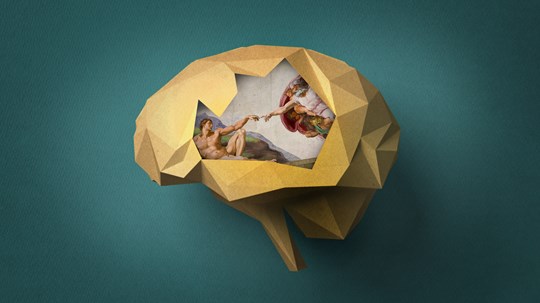
adameve.jpg

A century and a half ago, Herman Melville (he wrote Moby Dick, but don't hold that against him) observed, "In certain moods, no man can weigh this world without throwing in something, somehow like Original Sin, to strike the uneven balance." It's remarkable to me that even today artists often come to the same conclusion: human experience doesn't quite make sense without some provision for inborn and radical evil. Even Hollywood has explored this theme in recent years. There Will Be Blood is a chilling story of humanity's incorrigible greed. Cormac McCarthy's novel (and the Cohen brothers' movie) No Country for Old Men deals directly with the concept of incarnate evil through Anton Chigurh, a villain who toys with human life mostly out of boredom. Apparently screenwriters are beginning to ask questions novelists have been asking for years.

G. K. Chesterton called sin "a fact as practical as potatoes" and original sin "the only part of Christian theology which can really be proved." Of course, not everyone takes it so seriously. Comedian Eddie Izzard calls it a "hellish idea. People have to go, ?Father, bless me for I?did an original sin. I poked a badger with a spoon.'" And there are those, too, like Oprah and Eckhart Tolle, who think too highly of human potential to entertain the idea of depravity.

But it's not only non-believers who lampoon the doctrine. Many Christians consider it an Augustinian idiosyncrasy that unfortunately made its way into Christian dogma - the invention of a guilt-ridden philanderer. An appeal to Martin Luther is little help; he'd no doubt be on antidepressants were he alive today.

However you feel about it, though, either embracing or rejecting the doctrine has its consequences. In his new book, Original Sin: A Cultural History (HarperOne, 2008), Alan Jacobs shows how a society's position on the doctrine affects everything from child rearing and education to law making and the formation of government.

Surely there are religious consequences as well. It seems to me that how we think about ourselves will have direct implications for how we understand discipleship. If we think we're basically all right at the core, then Jesus will be for us a sort of life coach to smooth off our rough edges and help us make good choices. But if we suspect that we humans are deeply and ontologically flawed, then we can understand what Paul means when he says that those who are in Christ are new creations.

Should we strive to become the best possible versions of ourselves, or altogether new persons? When you put it that way, most of us will say, "New persons, clearly." After all, evangelicals have a reputation for taking sin seriously. On paper, most of us affirm some version of original sin.

But what we prescribe says an awful lot about how we actually understand our illness. Take Joyce Meyer, for example (her new book showed up on my desk recently). According to Joyce, The Secret to True Happiness (Faith Words, 2008) is to "Laugh a Lot," "Get Some Rest," and "Keep It Simple," among other things. If that's all the medicine broken humans need, then we must not be so bad off after all.

It's easy to pick on someone like Joyce or the inimitable Joel Osteen. And it's become fairly popular - wrongly, I'd say - to criticize emerging Christians for being soft on sin. But what do our ministry paradigms and church programs and sermon series suggest about our understanding of human sinfulness? Do we merely treat symptoms with five steps to financial freedom or six ways to divorce-proof your marriage? If we think all we need are tips and strategies, and not radical transformation, are we really taking sinfulness seriously? If not, then can we really take Jesus seriously? We - myself included - excuse all sorts of behavior by saying, "That's just how God made me." We think we can do anything if we just believe in ourselves. Certainly we're made in the image of God. But do we take seriously enough that the image has been distorted?

It takes a bit of imagination to envision ministry built with a robust sense of fallenness as a starting point. Especially if you hope to avoid browbeating. I'm not advocating for "all your good deeds are filthy rags" and "dangling over a yawning hell by a shoe string" Christianity. I got my fill of that growing up. And I'm not promoting a Calvinist view of total depravity. You don't need one to recognize that we humans are not what we were made to be (see the Eastern Orthodox Church, for example). But what would the American church look like if we began to acknowledge that it will take more than programs and education, more than community and fellowship, more than doctrinal precision and striving to restore shalom in Creation to make us disciples?


Share this:  Add to facebook?  Add to Del.icio.us?  Add to digg?  Add to reddit?  Add to stumbleupond?   

Related Tags: Brokenness, Formation, Growth, spiritual, Sin, Soul, Spiritual formation

Comments

excellent piece. i've been wrestling with this topic recently. being a recovering alcoholic, i know people who have been miraculously delivered from drugs and alcohol - lives turned around completely. i know others - myself included - who have to live one day at a time with an incredibly painful thorn in the flesh. we have people in our churches who seem to glow with the joy given them by their faith - and others - myself included - who seem to make this road through life and ultimately to heaven much tougher than it really needs to be, demanding a reason and rhyme for everything.

so the question becomes: is it the makeup of the person somehow that determines what 'new creature' is made? is having the Holy Spirit come and indwell the new believer simply a nice picture, or is it a physical / spiritual reality? does conversion happen, followed by a few noticeable life changes, but in the end God just has to shrug His shoulders and say, well, you know, i really didn't have all that much to work with when i started...

as with most things, the answer lies somewhere in the middle, i think. faith without works is dead. we try to do the next right thing. reality says we take a step forward - in part fulfilling our human potential, in part trusting God to step along with us. a too-high view of ourselves is just as misplaced as a too-low view - the challenge is to be 'right-sized', always aware that things getting 'better' - including ourselves - depends on God and us working in one of those 80s-buzzwords 'synergy' deals...

so there's the glass-is-half-empty view. let the pollyannas jump in whenever they're ready... :)

mike rucker
fairburn, georgia, usa
mikerucker.wordpress.com

This was a very thoughtful, well reasoned article, one that seeks for a balance that is all too often missed.

I, on the one hand, don't think we can remove falleness from our core set of Christian doctrines. Like Brandon writes, you don't have to read Augustine to find evidence of this thing called "falleness" or "depravity" all around us.

I myself am an emerging Christian. And, because I take seriously God's heart for redemption in every sphere of life, in all aspects of Creation, I need to take seriously - as do others - this issue of brokenness.

But I would also point out that, as Brandon helpfully points out, this does not mean we opt for an extreme form of depravity- as found in some streams of Calvinism. As has been pointed out by others before me, it is ironic that people that hold to such an extreme form of total depravity, trust their own depraved conceptions - derived from a depraved mind - to draw such conclusions. That’s more than a little ironic… and suspect.

We really do need to strike a balance here. I like Scot McKnight’s conception of “cracked icons”, and I would highly recommend his book A Community Called Atonement.

Ultimately, it does us no good to pretend the problem doesn't exist. It does. And it is at the root of all of the world's problems - problems that I fully believe Jesus wants to see resolved - along with our own individual "personal" brokenness.

So let's avoid calling people worthless bits of trash who have no value outside of God's sovereign work of regeneration. But on the other hand, let’s not lie to people, telling them that change is all within their power.

The only hope for the world comes in understanding that the line between good and evil travels not between generations, not between classes, not between nations, not between cultures, but down the center of every human heart.

Regeneration, restoration, and integration must begin there for us to have any hope for the same to happen across the planet.

What baffles me is all the ruminating over this subject.

A simple syllogism --

The wages of sin is death.
As in Adam all die.
Therefore we inherit the original sin of our progenitor.

As Brandon O'Brien points out, from Paul in the concept of "new creation". Too may think in terms of salvation as a "reclamation project" rather a "new creation" or they have not thought long and hard enough about the fact that there is no logical equivalence between the two.

What do folks think is meant by "...and you hath He quickened who were dead in trespasses and in sins..."? Since death was our nature course does God bring death upon the innocent? "Shall not the Judge of all the earth do right?" Of course He will. "There is none righteous, no not one." Therefore back to the syllogism above.

Original sin was one of the key doctrines of Christianity that John Wesley defended. He saw it being undermined by many of the same psychologizing forces still with us. He demanded that his Methodist preachers preach it. So I don't think you have to be a Calvinist to defend a robust notion of sin. It's rather telling of our times that one immediately thinks of the Reformed tradition when thinking of an emphasis on sin.

It's also interesting that you cite Chesterton's idea that sin is empirically verifiable, a point (oddly enough) later tabled by Reinhold Niebuhr. I rather like Stanley Hauerwas' point that you can't really grasp the deadly reality of sin until you're in Christ. Once you're on the other side to see how green is the grass do you realize how deadly dry the old lawn was. So we must be careful about pushing that empirical notion of sin too hard.

Your closing question is a bit puzzling. True, we won't educate or program away sin, but certainly the Holy Spirit works through education and programs (cf. Mike's comments above about alcoholism, taken along with AA).

Most puzzling is the implied critique of "community and fellowship." If you're committed to the fact that "sanctification is salvation" (as I am), then sin will ONLY be dealt with in community, namely, the Church. I suspect your critique on this point, however, has more to do with a deficient sense of community in America. Somehow our democratic (Anabaptist?) notion of Church as a voluntary association of the like-minded just doesn't grasp the union in the Spirit accounted for in the New Testament.

On a concluding aside, I wonder if we don't emphasize sin too much! How many times have I heard Christians say that sin is just part of being human (!)? We fear actual holiness because, ironically, we're so convinced that we'll never overcome sin. What a strange world: original sin is a hoax and so is holiness.

I find it odd that Christians question the idea of depravity at all. It was actually the doctrine that lead me to Christ as I began to see inherent selfishness not only in others but myself. I am beginning to believe that the pursuit of "evangelism" has led many Christians to abandon any semblance of absolute stances on key issues in order to not offend people. We are adopting the world's perspective so that the world won't find us odd.

This reminds me of the scary day as a freshman in college when the teacher had everyone who believed human beings were basically good to stand on one side of the room and those who believed human beings were basically evil to stand on the other side. There were about 15 on basically good side of the room and 2 of us on the basically evil side of the room.

Just a note here: "Depravity" is a different thing from "Total Depravity." I'm expecting some folks in the upcoming comments to use them interchangeably. Most non-Calvinists believe in depravity, but "Total Depravity" is a specific doctrine that has a specific meaning, not entirely related to your post.

Luther said that believers are simultaneously justified and sinners. This is a difficult but necessary tension to maintain.

Understanding that one is a forgiven sinner does actually give one a Godly freedom. Having grown up in an environment keen to preach sin in case anyone got out of line, I often wondered whether we were really supposed to comprehend our forgiveness? Similarly, one can't appreciate the Godly freedom of forgiveness if one does not believe oneself to be a sinner.

This is a great article! I love the dialectical tension, which helps to highlight the multifaceted and layered issues at play here. To be fair, I guess a little 'positive thinking' is not always bad, and even perhaps scriptural ("think on these things"). At the same time the inner conflicts the bring a bit of ontological desperation is a healthy thing too. The article captures this paradox quite well!

Did anyone ever consider that maybe people are neither inherently good or evil? That evil is merely a byproduct of free will?

Seems to me Jesus taught that. Judge not lest ye be judged. Let he who is without sin cast the first stone. Seems to me Jesus did not preach hellfire. Jesus preached forgiveness and understanding.

And it would be refreshing to me if both the church and fellow Christians would do the same.

From John 8- "Jesus replied, "I tell you the truth, everyone who sins is a slave to sin...You belong to your father, the devil, and you want to carry out your father's desire..."

Where is the basis for questioning the basic depravity of humanity? It seems clear to me.

I think that CS Lewis treats the idea of depravity wonderfully in "Mere Christianity", which is why that book is such a necessary component of anyones library who cares about apologetics.

That said, as a staunch Calvinist, I am always suprised at how grey most people treat derpravity and Original Sin as being. To me, I find it hard to see any options outside of the cliched 5-points of Calvinism (or at least 4 of them, TU-IP) if we truly believe that Original Sin exists. If we truly believe that we are born with an inherently sinful nature (Psalms 51:5, 58:3), which seeks to do no righteousness (Romans 3:10-12), then how is it ever possible for us to do good (in the eyes of God) outside of His divine work inside of us? It really baffles me how people are able to believe that, though our spirit is set on "following the prince of the power of the air" (Ephesians 2:2), we somehow are capable of choosing to do otherwise on our own? Could somebody please offer an explanation for how this is possible?

This is the scary day that the defense of extremes and false antitheses is still alive and well in Christianity.

Basically good vs. basically evil?

Are you serious?

Why not good, made in God's image, but tragically marred and turned inward to worship the self?

And let's be careful not to start throwing Augustine around, lest we become the epitome of what happens with most challenging theologian's thought. (i.e. It's not Augustine, but what people have done with him. It's not Calvin, but what people have done with him. It's not...you get the picture.)

The fact that people get their hackles up to, in essence, defend evil is really demonstrative in itself of how sinful we are. I submit that it's a subtle form of reveling in evil and not the good. (I Cor. 13).

Sin is serious.
It's brought the whole creation under bondage, but we are the agents of the King who has, and is, and will set us free.

The so-called critique of "sin" is not so much a "shocking", "surprising", critique of central doctrine itself. (Please. Really.)

It's actually a critique of the perceived need/desire/obsession of some people/speakers/theological "camps to emphasize sin with only a cursory offer of hope, salvation, etc.

The dignity of God's creation--because it is GOD'S creation--and God's love his creation is the basis on which God chose to give God's Self to us in Christ. John 3:16-17, anyone?

As Christians we can raise a critique of the Tolle/Oprah/Osteen dreck, but we compound sin by going to the other extreme by not being careful that we are agents of healing and hope.

That's not being soft on sin, that's proclaiming the solution to sin--something you and I can't do, but God does for us.

If that's not taking sin seriously then I'm glad to be flippant. I learned it from Jesus.

The bottom line for me is this:
I don't live in a world where I'm surrounded by people who don't think sin is real, etc.

I live in a world surrounded by people weighed down by sin, their brokenness, the results of their admitted bad choices and rebellions.

They need the Gospel, not a lesson in theological anthropology for the satisfaction of some self-appointed gatekeepers with book deals and conference gigs or self-righteous evangelical radio orthodoxy sycophants who need some "other" to demonstrate the good news of their own righteousness to themselves.

There were about 15 on the basically good side of the room and 2 of us on the basically evil side of the room.

now, see, Larry - that's where you and i would part company. even though anyone who knows me as well as i do - which, thankfully, is only God, and God probably wishes he didn't... - would say i've been very much the jekyll/hyde character paul describes in romans. however, i tend to look at everyone as having the image of God in them, and i believe that more often than not attempting to appeal to that good nature encourages people to rise above themselves.

there was a story on the news last night here in atlanta about a pilot program where young drug offenders aren't sent to jail but instead assigned a volunteer mentor from the community for a year, given random drug testing, made to report consistently for probation, etc. now, we could send the 8-10 young men that are the guinea pigs in this program to jail for a year, let them out, start counting the days until they're back in court, and blame it all on their sin nature. instead, we're appealing to what some - me included - believe is a desire to do good inside of them. yes, some will fail the program and be back on the streets, but likely a few will succeed and their lives will be changed in the process. and i would bet dollars to donuts that the mentors involved are telling these boys that God has so much more in store for them than the self-destruction they've so far demonstrated.

my guess is that john calvin had some closet sins that ate him alive, and he - accurately or not - believed there was no depth he couldn't descend to. ditto aristotle, who sank to many. something happens somewhere along the line, though, where the guilt and shame that runs a treadmill of self-fulfilling prophecy turns into an upward glance towards the salvation that is available.

perhaps that's the turning of the heart that Calvinism says man cannot do, but must be done by God's hand.

or perhaps it's somehow a little bit of work done both on God's part and ours; and that's where my belief is.

i wrote a little piece this past weekend you can read here where i use the analogy of a trampoline to describe those initial saving moments. it might give you a little lift (ta-dum).

mike rucker
fairburn, georgia, usa

Really good article, Brandon, and I think you're exactly right in questioning the self-help style discipleship. As you mentioned, Joyce Meyer and Joel Osteen are sort of the poster children for this approach - which accounts somewhat for how easy we find it to pick on them, I'm sure. I doubt, though, (and I could be wrong, because I can't say for sure) that they're the ones mentioning Augustine or Luther by name and then further delving into a historical argument against their hermeneutic. Of course, I understand your point, which was that regardless of why one discards the idea of Original Sin, the effects of doing so are far-reaching.

I only draw the distinction between the Osteen camp and the Church History geeks because I feel some sympathy - if perhaps not total agreement - for the latter. Of course, as you said, most of us still affirm some version of Original Sin (on paper), and I'm not an exception. This is because I do believe, as Paul said, that because of Adam death passed upon all men and that when we are in Christ (instead of in Adam) then we are new creations. I do think this speaks to some real kind of inherent depravity in all of those who were in Adam. My hesitancy comes in when the doctrine begins to be worked out to its most full, philosophical sense, and suddenly we are fashioning a doctrine like "age of accountability" because we like neither the idea of baptizing infants nor the idea of children condemned to hell.

Although I'm hardly an advocate of treating Scripture like a legal document, I fear straying too far from Paul's words on this issue simply because of the other problems I'm forced to reckon with. This leaves me feeling like I have enough room to both sign my name at the bottom of a page which includes the words "Original Sin" (since, as you said, I believe in some concept of it) but also just finicky enough to make the distinction between the theology geeks and the Osteens. I do hope you will forgive me for this and also know that your point - which is an issue that stands completely apart - was not lost on me, but was, in fact, appreciated.

Johnny

Did I misunderstand something? I got the impression that the author of this article criticized deservedly so) Oprah and Eckhart Tolle for touting that human beings have far too much potential to be depraved yet he seemed to defend Joyce Meyer and Joel Osteen and other emergent leaders for being soft on sin. Is he afraid he will fall in the bad graces of these "high-profile preachers" if he says that they are soft on sin? They are soft on sin! Is it really bad when Oprah attempts to soften sin and okay when Joyce does the same? Really?

Important to rememeber that the doctrine of Original Sin as understood by Calvin, was not that human beings were totally evil and unable to do any good at all. Calvin taught that our whole personalities and minds are so polluted by original sin, that the good that we are capable of is of no use to us in our attempts to know God or please God. That's why we are totally dependent upon God's sovereign grace for salvation.

Man. I've been wrestling with the whole concept of sin and repentance for the last several months, and come to no good conclusions. I'm thankful for this, since it sheds some light on an oft-forgotten area of spiritual growth and formation: sin and repentance.

I include repentance in there for an obvious reason: though we have sinned, and are tainted by sin, to focus so much on our depravity can leave us without hope. The antidote, at least to me, is to pray that the Holy Spirit will illumine the extent of the sin in our lives, so that we can turn away from it.

That's where all the programs and steps are deeply flawed. They only fix the symptoms (financial freedom, a more intimate marriage, etc), and leave the disease untouched. Deep repentance, however, marked by solitude, prayer and confession (maybe even a little fasting?), and dependence on the Spirit to help us live as the "new creations" we are is what, I'm convinced, cures the disease. After all, the original Greek for "repentance" is "metanoia", or turning, which means that the person repenting denounces their sin and moves away from it. Only then, after this critical move is made, can any of our programs work, since we've gotten the base disease in check, and then we can work on the symptoms.

one more story and i'll keep quiet (maybe...probably not):

here's a bit about the Rock, aka Dwayne Johnson, from the latest Men's Journal, as reported in this week's The Week:

Coach wanted so much more for me. He pushed me - got me to apply for scholarships." Johnson got into the University of Miami, which led to a football career in Canada, professional wrestling, and finally, Hollywood.

here's the part i want you to notice:

Lowering his head, he says, "I could have easily gone the other way."

totally depraved? i think not. simply a human being who had a hand stretched out to him, inspiriing him to do more.

mike rucker
fairburn, georgia, usa
mikerucker.wordpress.com

It seems hard to swim in the middle of the stream but I think that is our calling. On the one hand, I take issue with the "total depravity" crowd, on the other hand I take issue with the human potential movement and its related therapeutic church culture. What is just weird to me is that in many large churches I hear a "worm" theology, but I see practices that are rooted in our culture of optimism, particularly as we adopt various technologies for "spiritual" ends. We have tended to settle for "thin" description and become pragmatists and lost awareness of how these methods shape us in turn. I side with Belden Lane, "I really don’t want a God who is solicitous of my every need, fawning for my attention, eager for nothing in the world so much as the fulfillment of my self-potential. One of the scourges of our age is that all of our deities are housebroken and eminently companionable."

There is an interesting irony at play in the doctrine of original sin. If the doctrine is rejected, human dignity is evacuated of any genuine value. We are reduced to a mechanistic anthropology of some sort or other.

If evil is not innate in human beings then it must be the result of external factors. It is only logical, then, to seek explanations that in essence reduce us to a bag of reactive chemicals that can be modified and manipulated. We are seen as programmable.

Some will call for "better education" and others for "war on poverty" or perhaps "sensitivity training." The criminal justice system aims for "reform" rather than restitution and restoration. Uptopians strive for the perfectibility of humankind...

It is in the doctrine of original sin that human dignity is preserved. We are agents, not actors. We are responsible. We are, within the parameters of depravity, autonomous decision makers.

The church that diminishes the seriousness of sin devalues both the holiness of God and the image of God in man. Calling sin by its proper name and dealing with it (in grace) brings that which is into the light. Freedom and wholeness become available.

One quick example from our church. Three weeks ago two teen girls (both in foster care and in the juvenile parole system) stole cash from our coffee fund. They were caught.

Rather than making excuses for them, rather than diminishing the severity of their sin, rather than shielding them from the consequences their foster parents (members of our church) and the pastoral staff called it for what it was; not a prank or a joke but theft.

The consequences were spelled out. The one girl would lose visitation rights with her 18 month old son (!) and the other would be returned to jail. They were made to understand that there was nothing unfair in this punishment. It's what they deserved and they admitted it.

But we offered them grace, not indulgence, but grace. We secured the probation officer's cooperation so that their community service consisted of stacking 900 chairs after our Sunday services.

A firm but gracious hand opened a door to the gospel message which one of them believed this past Wednesday evening.

Original depravity? Sin? Call it out, name it and claim it. Then respond with grace and watch God do his redemptive work.

You hit the nail on the head. We, as the body of Christ, are not sufficiently convicted in our sin.

I have been blessed, I believe, by having come to the Lord rather late in life. Thus, I take seriously and feel Paul's statement: "Christ Jesus came into the world to save sinners--of whom I am the chief (1 Ti. 1:15). It is our calling to continually transform ourselves by the renewing of our minds so that we might achieve holiness (Ro. 12:2).

To truly emulate our Lord's example we must accept that, like Adam, we are dirt. Feeling bad about missing the mark (sin) motivates us to do better. It's not out of guilt; it's wanting to please your Father.

And it's not always about what you did; it's about those sins of omission. How have I failed to love like Jesus today? What did I do to build the kingdom today? Did I pray enough? Did I study His word enough? What material desires can I do without so that I have more time and money to serve Him? Did I miss an opportunity to help someone or to preach the gospel?

I believe in free will. But I believe that predestination gets overlooked. I'm not a Calvinist but it's hard to overlook Ephesians chapter 1 and Romans chapter 9. There is evil in the world and the Lord wants us to overcome it by living His word. He has placed us here with them for a reason.

Only through total faith, love and forgiveness can we begin to overcome evil with good. This takes reaching out to those mired in sin to try to help them in the name of the Lord. You can only do this to the max if you truly believe that you're no better than they are.

He has called you just as He has failed to call them. Are we worthy enough to be the tool of God in calling the lost? What you do to the least of these...

Thank you Brandon for "Defending Depravity". Excellent article and reminds me of my need to not only take sin in a serious way in the world at large, but also in my own life.

Brandon,

“Should we strive to become the best possible versions of ourselves, or altogether new persons?”

Well, neither. Striving for either of those will only leave us mentally and emotionally exhausted. This is because the brass ring is unattainable. We are born dead. Not sick. There is a great rift between God and us. When we are born again, God does not drop us part of the way across and tell us to swim. Jesus said, “It is finished.”

“I’m not advocating for “all your good deeds are filthy rags” and “dangling over a yawning hell by a shoe string” Christianity.” All right. Why not? What is the alternative? Do people who think they were not born lost enter into the kingdom? A person who has no grasp of personal depravity has no need of God, no need of a savior. I’m OK. You’re OK. Do you really want to leave people with that message? Do you really believe that message?

Once we are born again, we still must battle our flesh. One of our (Christians’) post-conversion self-indulgences is to buy into the notion that we can merit any degree of our justification through our works. We embrace the Gospel. Then, once we have accepted Christ we set the Gospel on a shelf as if it were a conversation piece in our trophy case. A collectible, worth much but not intended for everyday use.

Another common temptation is to measure ourselves by what we see on the surface of the lives of those we encounter on Sunday morning. We know our own stumbling blocks. And unless our neighbor’s sin is one of the high profile big ones (alcohol, drugs, adultery…), we have no idea that they are struggling with covetousness or gossip, et. al. Against whom are we supposed to measure ourselves?

All of this self-based striving and others-based self-assessment leads to one end. Medication. Wellbutrin works pretty well for me.

First Corinthians IV

“7 For who regards you as superior? What do you have that you did not receive? And if you did receive it, why do you boast as if you had not received it?”

Repentance is unlikely without this. We attribute sin to disfunction in our society today; christians included. I stole as teenager because I liked to get free stuff. Until I dicovered this depravity doctrine I honestly thought it was because my parents got a divorce. Jesus really has been reduced to life coach in today's church because the life coach message is not offensive while the sin and repentance message is very offensive to those who believe sin is only negative life patterns that need to be changed.

Self-improvement, as grand as it sounds, usually has a mental masturbatory bent to it which is quite unattractive and generally, and rightfully so, repulses us. The reason being is that self-improvement is generally based on the five senses of our perception...and depending on the reaction that our environment, whether negative or positive, gives us we assign modifications to "perfect" ourselves as a response.
We then are reacting...not a very good way to "perfect" ourselves.
I would point many of you to Rene Descartes.
So, to strive for perfection is a noble pursuit, but vain as well.
Why?
If we ascribe to the knowledge that we are imperfect, and yet can conceive of perfection, then we are drawn to it because it is in our nature. A negative is always drawn to the positive.
And yet, because of our imperfection, we cannot be perfect because our basis of knowledge is imperfect, which would lead to our actions/responses/results to perfect ourselves being imperfect as well.
Thus, because perfection exists, and we are imperfect, we must yield to perfections manipulations/corrections/redirections, and trust that perfection will perfect us to it's satisfaction.
And it all starts with our admission that we are imperfect, and that our desire for perfection can only be achieved if we allow perfection to perfect us.
I other words, the story of grace, ladies and gentlemen, in philosophical terms.

What a great conversation! THIS is the kind of stuff Christians ought to be talking about all the time. Finally, here is a discussion about truth. Not what gimmick can make your church grow or how to tell better 'stories' from the pulpit. We need to remember that the ten commandments were given in part because the children of Isreal were wallowing in sin and couldn't see it. These were the same behaviors we see in our society (and in our churches) today; commiting adultry, stealing, dishonoring parents, murder, jealousy (so how big is your congregation?), taking God's name in vain (cuss so you can be relevant to the culture); working on the Sabbath (no I'm not 7th day Adventist). Styles and technology change but sinful man never does.

I must say that I disagree with almost everyone in this posting. I am not saying that we should take sin lightly but it should not be part of our identity. The real question is how does God see us?
1. We are a new creation, 2Cor5:17
2. We are united to the Lord and one spirit with Him 1 Cor6:17
3. We are children of God and one in Christ. Gal 3:26
4. We are God's workmanship Eph 2:10
5. We are righteous and holy. Eph 4:24
6. We are citizens of heaven. Eph 2:6
7. We are part of the true vine. John 15:1,5
8. We are saints. 1 Cor1:2
9. We are hidden in Christ with God Col 3:3
10. We are chosen race, royal priesthood, a holy nation, a people for God's possession. 1 Peter 2:9,10.

If our self-identity is to see ourselves as a wretch and depraved, we will be defeated. If we see ourselves as God sees us, a new creation, we are on the path to be victorious.

Mike Rucker, you are at variance with the Apostle Paul who says that the natural man has no part in spiritual things: "But the natural man does not receive the things of the Spirit of God, for they are folly to him; and he cannot know them because they are spiritually discerned." So unless you do not see salvation as a spiritual act your position would need reconcilation to this statement.

Micah, I am not sure what you understand the meaning of "total depravity" to be. Here's mine: Total depravity means that mankind is evil in all aspects of his being. It does not mean that he is as evil as he can be. "And GOD saw that the wickedness of man was great in the earth, and that every imagination of the thoughts of his heart was only evil continually." So unless things today are any different than they were in the days of Noah (and they aren't), we cannot conclude otherwise.

Robert Veale at May 26, 2008 points to a number of wonderful scriptures. All of which are true to the person "in Christ" outside of Christ "all our righteousness is as filthy rags". I thought this dialogue was all about man in his natural condition.

Robert Veale,
That is a nice survey of how God views Christians post-salvation. Unfortunately, the issue of depravity is about how God views unsaved people. For this there is a different list:
1. We are dead!(Ephesians 2:1, Colossians 2:13)
2. We are children of wrath!(Ephesians 2:3 5:6)
3. We are unable to please God!(Romans 8:7,8)
4. We are enemies of God!(Romans 5:10)

We must be careful not to let all of the nice things which God says about his people go to our heads. First, we must remember that even if we are his people that we once lived our lives in this manner and so we should be thankful for all that Christ has delivered us from. Second, if we are not believers then we need to realize that we are not in a very comfortable place in regards to the God's judgment. The list of ways God views his people are nice, but we can't pretend that that is what's true of everybody!

I get the point of this article, and I agree with it. But I'm troubled with how the point is presented, and how many commenters have claimed that it is "well-written" and "excellent".

Saying that depravity is a newly discovered theme in film is where this piece was immediately derailed. Depravity has been a theme since it was discovered you could do more with the medium than freak audiences out by projecting a train bearing down on them.

Then the article starts throwing rocks around at the admittedly 'easy' targets. But has anyone ever asked Oprah point-blank about her take on depravity? Is it fair to criticise a light-hearted book for not being an in-depth theological how-to manual?

The presentation of this piece weakened a strong point. One that could have been made in a single paragraph. And painfully showed that we Christians have a long way to go in critical thinking.

*sigh*
How tiresome and tedious.

As far as this thread has developed, my earlier observation still stands.

The fact that people get their hackles up to, in essence, defend their doctrine of sin/evil is really demonstrative in itself of how sinful we all are. I submit that it's a subtle form of reveling in evil and not the good. (I Cor. 13).

Again,
I submit that we don't live in a world where we're surrounded by people who don't think sin is real, etc.

We live in a world surrounded by people weighed down by sin, their brokenness, the results of their admitted bad choices and rebellions.

People (myself included) need Jesus, not a lesson in the theories of theological anthropology for the self-satisfaction of self-appointed gatekeepers with book deals and conference gigs or self-righteous evangelical radio orthodoxy sycophants who need some "other" to demonstrate the good news of their own righteousness to themselves.

The fact we need to argue over theories of sin is very telling.

nathan,
But you are missing the point. I agree, it seems true that "we don't live in a world where we're surrounded by people who don't think sin is real, etc." I think that our society does believe that sin is real. The problem is, they don't understand the severity of it! The fact that people think they are basically good leads them into this confusion of "What really is sin?" and "How exactly does it affect me life?"

But then, this leads to the point which I know at least I have been trying to make all along (and others too I think): if we view ourselves as basically good then we still stand a chance at making ourselves better; but, if we view ourselves as utterly depraved then we realize that we need someone bigger than ourselves to right the ship (though, as I'm sure most of us will subscribe, this ship-righting isn't necessarily always a this-life type of thing).

How do you share the Gospel with someone who does not understand the severity of their own sin? How do you convince someone who thinks that they are still capable of saving themselves that they need to let Jesus save them? I don't think you can. I think that all you can do here is tell them that Jesus was some great guy and that they should agree to follow him, but the real submission will only come once they truly understand why they need him. And that need is because of their depravity!

OR is the answer to affirm the goodness that God undeniably declared about us AND the tragically marred state of that goodness that can only be repaired by God?

I would judge that to be closer to the biblical picture of our condition, rather than going to a reactionary depth that, to me, does not sufficiently account for the tensions of how humanity is depicted in the texts.

It is clear to me that I don't need to go to "worm theology" to help people understand the severity of their need.

We simply proclaim that there is something only God can and must do if we are to be saved.

Why is that clarity about the action of God alone not good enough for so many people?

Nobody here (at least I'm not) is praising "worm theology." There is a difference between understanding the depraved state of the human condition without God and believing that self-abasement is the only way to know God. Most mainstream Calvinist don't hold to any sort of thought that man is the trash of the universe. Instead, we believe that man is the pinnacle of creation but that the sinfulness of the flesh has corrupted that which God created to be good, and so the need for the savior is the need to find a way back to be the man that was "created in Christ Jesus for good works, which God prepared beforehand, that we should walk in them (Ephesians 2:10)."

Moreover, your comment about "OR is the answer to affirm the goodness that God undeniably declared about us AND the tragically marred state of that goodness that can only be repaired by God?", unbeknownest to you apparently, captures the idea of total depravity. God created us good, we turned it bad, and only God can take it back to good. That is total depravity! The problem you have is that you want there to be some grey area. But, unless you subscribe to some (flawed) Catholic tradition about Purgatory, you have to admit that God is a black and white God. The wages of ANY sin is death. That was proclaimed from Genesis 3 all the way into the New Testament in passages like Romans 3 and 6. Thus, it is only by a perfectly righteous substitute in Christ Jesus (2 Corinthians 5:21, 1 Peter 3:18) that we are able to stand justified before a holy God. That's it. There is no middle ground. By our sin we are separated. By Christ's death, and our subsequent faith in it, we are reconciled.

Todd,

I know that what I described is how some people would characterize "total depravity". (Hardly unknown for me, but that's besides the point.)

The point, for me, is there is a huge difference in articulating it the way I have in this thread vs. the way others have.

It seems that if I, and others like me, don't "say it the right way" then all kinds of calumny and disagreement arises.

I have experienced directly that when I speak of sin this way there are others, who speak like some on this thread, that say that I and others like me are "soft on sin".

I don't think there is a real difference between us, Todd, or the substance of our positions, but I'm not concerned so much with people who have a nuanced theological understanding of nuanced realities.

I'm concerned with how a deserved critique of those who say "Humans are evil" AND stop there with nothing more--even in this thread--tend to be written off as being soft on sin, not faithful to Scripture, etc. etc. etc.

I'm concerned with the Christian who seems to revel in "letting people know the truth" about their "badness", but give a cursory treatment to the saving grace of God.

There's really something wrong with that.

To Lavish time on the need of humans in their rebellion and then sweep in with a short-hand, half-baked "escape clause" without lavishing the beauty of God's grace on others is, despite its "righteous" form, really sick.

It reveals something deeply sinful in their thinking and is a betrayal of the precious absolute Truth and Scripture they claim to be the guardians of.

As I understand the Bible, after God created us in his image, God said we were good. However, we keep sinning and falling short of our created potential. We need to be born again of the spirit as Jesus was conceived in Mary's womb. Jesus was both fully man and fully God, as the Council of Chalcedon affirmed. When we are born again of the spirit, God redeems and reforms us to become both fully man and eventually (in heaven) fully God--sons and daughters of Jesus Christ through the power of the indwelling Holy Spirit. We need the Holy Spirit to create this new life in us, just as Jesus was created in Mary's womb.

All the above discussions miss one important point and therefore come with partial or wrong interpretations of Scripture and detract from the Cross sacrifice of Jesus that shows exactly what man is and needs. The Lord has placed a conscience in fallen man (Rom. 2:15) . This conscience is a restrainer for sin very much as the government and authorities are restrainers of sin, particularly in a democracy as ours. Conscience or government cannot make a totally depraved person (unsaved, apart from Christ) any more moral or "better". It is like a leash on a wild rabid animal completely depraved. When the total conscience becomes totally seared the human being has broken the leash and man becomes like an incarnate demon, very much as the condition before the universal Flood in Noah's days and before the Coming of Christ as Scripture states. Democracy perishes as well as society and family and Judgement follows.

Let us get ONE thing straight guys. Coming from an orthodox Hindu background my earliest fascination for Christianty is that what Melody quoted as how God sees us or assures us of his role in our lives. This is absent in Hinduism.It scares me to even to think of any other interpretation simply because it will be judged from the same pedestal as Hinduism or Islam. As for me Jesus promises are the ultimate example of His love for us.When that belief stays firm as the center of our faith,all the situations life throws at us can be dealt in a positive light.

While I agree with the people who write about who we are in Christ as Christians, it's also true that it's only when we see clearly who we were before Christ came into our lives that we truly appreciate who we are today. We are new creations in Christ when we have accepted Christ as our Savior and life, but the millions who have not accepted Christ are still sinful and spiritually dead people headed for hell - not just people who need a helping hand and a clap on the back!

We need to hold both these Biblical truths high if we are to reach people. Christ needs to become both Savior and Lord. Today one of the big problems is that many believers only see him as Savior, but not as Lord and their only hope and way to experience abundant life. Christ is life, and only when we submit to him and accept that we are his sheep - and in that process accept that we don't know best and accept his lordship no matter where he'll take us (Psalm 23).

I am deeply troubled by all the self-help books with a few Bible verses thrown in for religious effect that flood the Christian bookstores. They appeal to my flesh, but they don't produce life in the long run. The different books will work about as long as any new year's resolution - approximately 30 days...! Christ's way of life and growth is always through death and resurrection - there is no other way! It's never about me improving myself or about Christ improving me. It's about him being allowed to live his life through me. That's real lordship!

nathan,
After reading your last post I too agree that we are not that different. I agree with your statement that humanity needs more than just an understanding of depravity but that they need to be introduced to the abounding hope that is in Christ. In fact I just posted on my blog about how when Jesus talks with the Samarian woman that he builds relationship with her, introduces himself as the living water, and then confronts her about her sinful nature.

I guess I am guilty of being too focused in on the singular topic of depravity for this post that I missed your broader point on the need for our proclaimation and living out of God's grace alongside that knowledge of depravity. Sorry.

No worries, Todd.
It's a confusing thread to follow...things always get lost in the meta.

I appreciate your thoughts--even when I've disagreed.

I love the passage in Romans 7 wherein Paul, inspired by the Holy Spirit, expounds about how commandments against sin are to make sin "utterly sinful" and how that arouses in his sinful nature the desire to do the very thing we are commanded not to do. He pronounces his war within between the old sinful nature and his mind within which the Holy Spirit is working for transformation, renewal and freedom from slavery to sin. He ends by praising and thanking Jesus for bringing freedom from this bondage. If sin and sinful nature are glossed over, it also cheapens grace, forgiveness and the love and power of God, never the necessity of Jesus' sacrificial death in our place. What a wonderful, gracious, merciful, kind, loving and powerful God. May we all see Him for who He is and in that light abhor the fruitlessness of sin.

The author stops too soon. The original Church evolved into the Catholic Church. The Catholic Church has always been lenient with sin. All Churches today have evolved from the Catholic Church. And the preachers have mostly been preaching what they've been taught by seminary professors, who were taught by their seminary professors, who were taught... well you get the idea. There aren't enough preachers today who have been taught, and are led by the Holy Spirit... if there were, we wouldn't be hearing all these 'feel good' and 'self esteem' sermons. Yes we are too light on sin. Jesus healed a person that was sick, and forgave their sin, and then said, "Go, and sin no more." What part of that is hard to understand?

A great subject which I enjoyed. Most angles were covered pro and con without angry
arguements. What I would like is, What about
babies until they "become accountable?" Are
they of heathen parents as well as aborted
babies etc lost or saved? If we are all
under Adams curse of total depravity until
conversion they are in or headed for hl. I
am a Wesleyan, not a Calvenist. Yet I am not
satisfied with either answer to this.

I had a colleage tell me one day that "No one can change. Who you are is just who you are". I beg to differ. The word of God tells me in Romans 12:2 "Do not be conformed to this world, but be ye transformed by the renewing of your mind." My colleage told me that people can only make (temporary) adjustments until a situation shows up that brings the old you out. You know, when you used to curse someone out, but God delivered you and profanity is no longer a part of your nature because you are a new creature! I believe that God is always there ready to receive his children when we make up our mind to allow His word to change us. We are dead to sin when we become a new creature instantly. Old things have passed away and behold, all things have become new. II Corinthians 5:17. Being that total depravity is the fallen state of man as the result of the original sin, we are not inclined to love God and do his will. It is our inclination to do ME!!!! God is the creator and we are the creature. We were created to worship Him and because we were created to worship, even if we don't worship God, we will worship something (it is what we were created to do). You know a true believer when you see the change in their life and not be simply saying I am a Christian.

" What about babies until they "become accountable?" Are they of heathen parents as well as aborted babies etc lost or saved?"

The bible is quiet about that question Fred, and it is doubtful anyone can "reason" an answer that would be biblically correct. In fact, it has been done, and to be honest the answers have been "Damned" or "saved"...all depending on who you talk too.
Myself, I do not know...but I suspect that if unsaved mankind is judged by the law of G-d, a fetus, or a baby hasn't had time to put into practice their imperfections, but even that opens up even more questions of which the simplist explanation is, "I'm like you, completely in the dark."
So the basic answer is "we just don't know" and anyone short of G-d who says they do is lying...we're just going to have to accept our ignorance to that question till we present ourselves before G-d...and I suspect by then it won't be important.

Interesting post.

It seems worth pointing out though, that the fact that you've had your fill of “all your good deeds are filthy rags” and “dangling over a yawning hell by a shoe string” doesn't in any way detract from the objective reality of those phrases -- they are, in fact, what the Bible teaches.

In short, there is no middle ground. Sin is either:
(a) exceedingly terrible in its essence and consequences -- so much so that the death of the Son of God was required in order to redeem even a single sinner and the life of the Son of God is required to make anyone holy.
OR
(b) a set of flaws, prejudices and attitudes that can be corrected through concentrated effort.

In short, God either truly hates sin (if He doesn't, why was the death of Jesus necessary?), or He doesn't. The latter case takes different forms ranging from "He doesn't care at all" to "He's annoyed by it". But the Scripture is quite clear -- He HATES it. And so should we. And, by the Spirit of God, so will we.

Blessings.

"But the Scripture is quite clear -- He HATES it. And so should we. And, by the Spirit of God, so will we."

Okay, Tim, I'll grant the positional argument that G-d hates sin, but where does it say in the bible we should hate it too?
I see "flee from it" and "avoid it", and "do not do it!" but nothing about us actively "hating" it...perhaps you can point out for me that section of the bible that says we're to "hate" it as well.

Warning on "middle of the way positions".

In some articles above it has been stated that a "middle of the way" solution to a given problem (like total depravity)is the position to take. However, this is not so. For example, if we are 100% for Scriptural orthodoxy BUT without love. This is a legalistic Gospe, pharisaical doctrine of self-righthousness where our first love for Christ is abandoned as the Church of Ephesus is decribed in Revelation OR we are liberals where love is combined with compromise with sin (Sardis, Laodicea, Pergamum, etc) THEN both positions are not Scriptural.

And we have plenty of both false preaching based on those two positions. As a solution, people say "let us take a middle of the way solution" between the two positions, that should be the right position. There is no middle way between garbage and sewer.

The real position is one in Truth with Love, that is, the WHOLE Counsel of God given in the love of Christ in the power of the Holy Spirit, all in the Name of Jesus our Lord and based solely on Scripture. And this latter position is NOT a middle of the way position. This is the position that God takes in the Scriptures. It is a radical but life giving position that few follow because many want to be "politically correct" before men but they reject the glory of God and prefer the glory of men.


It's quite amazing for a sinner to be adopted into sonship afterall, and by His Grace we may have life. I still wonder how He care so much of his creation, that instantly accepting and believing is all what it takes.

I live in South Africa and agree completely with this article. It also true of South African Churches. I am a student at the South African Theological Seminary and has recently completed the subject 'The Doctrine on Man and Sin.' We are part of a broken world because of sin. Most Christians sadly do not understand the seriousness of our sinful condition. We are 'in Adam,' God's image in us is distorted and some scholars feel that mankind actually became genetically flawed at the Fall. God hates sin, He is 'allergic' to it because He is HOLY. If we play around with sin we are not new creatures 'in Christ.' He paid a terrible price to secure our salvation, and we are both justified and sinful. Our battle with sin will be with us until the second Coming. Church need to wake up, there are no quick fixes, only sanctification.

try telling that to people who have been sitting in church 5,10 or 15 years. Doesn't go over too well (I know from my experience). I don't think that the topic of depravity should be used as an excuse for sin, but I believe, like it has been said before, that until we realize how broken we are we will never fully appreciate Jesus' sacrifice nor will we realize that we are in no condition to offer any additional help to what has already been done for us. The trick (what it seems like to me) is finding the balance.....HELP, LORD! I believe that we will find a humility that causes us to fall on our faces before the Creator in love and adoration that has never been felt before...Pride keeps us from admitting or even considering that we can not do anything that will make us better. I could go on and on about this subject. it is just wonderful to hear someone else talk about it.

The comments here after my last post--for the most part--only serve to underscore my point.

Thank you!

Mike Rucker, you are at variance with the Apostle Paul who says that the natural man has no part in spiritual things: "But the natural man does not receive the things of the Spirit of God, for they are folly to him; and he cannot know them because they are spiritually discerned."

me?

arguing with paul?

and the calvinist view of salvation?

say it ain't so...

i continue to go back to the obvious: we take the assembled letters and books of the canon as divinely inspired since they were ok'd by the catholic church.

but we say these things are not valid:
- purgatory
- real flesh and blood of Christ in communion
- the apocrypha in the Bible
- the Pope's words being revelation
- the Pope being a descendant of Peter
- salvation somewhat by works

how did they get it completely right one time, and be so screwed up the rest?

mike rucker
fairburn, georgia, usa

So Mike, what do you use to learn about God then? Or even more intriguingly, what books DO you think were divinely inspired?

in response to sheerahkahn on May 28, 2008:

"Okay, Tim, I'll grant the positional argument that G-d hates sin, but where does it say in the bible we should hate it too?"


How about Psalm 97:10 "Hate evil, you who love the LORD". Or Proverbs 8:13 "The fear of the LORD is to hate evil". Or Amos 5:15 "Hate evil. Love good".

Or the passages in Romans 7 where Paul talks about doing what he hates.

Then there's Hebrews 1:9 (which quotes Psalm 45:7) which tells us Jesus' attitude about it: "You have loved righteousness and hated wickedness. Therefore God, your God has anointed you with the oil of joy above your fellows."

We are also admonished to be like our Father in heaven -- who we know hates evil. The great promise is that when Jesus comes we will be like him.

In short, our attitude toward sin should be the same as God's in our abhorrence of it. It is His to judge -- most decidedly NOT ours. But we should share His horror of it.

In response to HBS, Truth with Love is definitely what the Bible teaches. We must learn to love God, abhor sin in ourselves, and love, as opposed to judge our brother. And those who are in Christian leadership need to learn to help restore those who fall into sin. But in no circumstances are we to tolerate sin. Jesus died to save us from sin -- not so that we can continue to live in it -- yes, I know we won't be perfect in this life -- but that cannot be an excuse for us to not make every effort to strip off the sin that so easily entangles.

Hating sin is not the same thing as Pharisaism. Pharisaism is just another form of the sin of pride. Hating sin means loving God and desiring to see people (especially ourselves) be delivered from sin. Indeed, to return to the original point of the post, the true church will NEVER take a casual attitude to sin.

We need to remember that HOLINESS of God permeates all His Nature. Therefore,God has HOLY Love, Holy majesty, Holy omniprescence, Holy Spirit, Holy mercy.

For God to be holy is for Him to be holy in relation to every aspect of His nature and character.

A God-centered view of sin will make all the difference in the way we view sin. Sin would not be seen first as damaging man but DISHONORING GOD. And sin would not be seen as the choice of pleasure, but the loss of pleasure (Jeremiah 2:13)

The Cross is the revelation of God's terrible holiness and gracious protection from its wrath. The cross is the place where God's holiness changes from a fearful blast to a thing of beauty. The Cross would not be demonstration of my value, but of the dreadfulness of demeaning God's value.

In other words, it seems to me that much of the discussion about "the amount" of depravity of man from total to "not as depraved" are man-centered views rather than God-centered views. How do we look in our natural state to God? The answer is dead, wretched, naked, putrefact from head to the sole of the foot (Isaiah 1:6), lost eternally, twice dead, as a sepulcher (Rom. 3:10-18. Where is our holiness or what section of us is not rotten?

As I mentioned before God in His mercy placed a conscience in the human fallen race to restrain sin but this conscience does not make us any more holy or righteous before God. We need the full sacrifice of the Cross to be imputed holiness and righteousness from God or we will continue in our total depravity regardless whether Calvin or Luther stated the same.

It will make all the difference in the way we view the righteousness of God. God would do right to the degree that he maintained an unwavering allegiance to his own infinite worth and did everything to magnify the beauty of his holiness.

Tim,

tbh...this mode of communication is rather limited, and I appreciate the effort you went to dig up those verses, though I suspect you don't fully comprehend the larger message behind them...but then again you could too.
As of right now, I just don't know.
As I said, this mode of communication is limited so there are possible personal nuances of thought that would qualify your thinking that is not coming through your writing which would clarify things for me a lot more.
But...
Right now your thinking strikes me as very legalistic, but Essene-like...um, monastically orthodox in a Dominican way...with just a hint of Jesuit thrown in to ensure conformity to the Benedictine maxim.
Once again, the method of communication allows a lot of imprecise impressions to be entertained, so if you wouldn't mind clarifying your thoughts some more I'd appreciate it.

"And I’m not promoting a Calvinist view of total depravity. You don’t need one to recognize that we humans are not what we were made to be (see the Eastern Orthodox Church, for example)."

What?

Bud Brown insightfully wrote the following:

There is an interesting irony at play in the doctrine of original sin. If the doctrine is rejected, human dignity is evacuated of any genuine value. We are reduced to a mechanistic anthropology of some sort or other.

If evil is not innate in human beings then it must be the result of external factors. It is only logical, then, to seek explanations that in essence reduce us to a bag of reactive chemicals that can be modified and manipulated. We are seen as programmable.

Francis Schaeffer once wrote a great deal about the modern heresy of determinism and its numerous variants, such as genetic determinism.

Genetic determinism is the basis for the ludicrous, falsifiable claim that gay can't control their sexual desires or actions, and that it’s bigoted to expect them to do so. That argument may be politically effective in the short term, but the long-term effect is an erosion of appreciation for the human trait called “free will”.

Such erosion may bring long-range negative consequences only peripherally related to sexuality.

The criminal justice system would be incoherent if we fully accepted the premise that people could not control their own thoughts or actions. Likewise, the concept of objective morality itself would be in jeopardy. That is why determinism is so dangerous.

Logically, the goal for any true believer in moral relativism and genetic determinism should not be self-improvement, but mere acceptance (sometimes described by liberals as “tolerance”). The result is spiritual stagnation.

Most people intuitively understand that that’s an unacceptable result, but they’re unwilling to make the sacrifices necessary for true transformation, so they settle for humanistic pseudo-solutions, which can’t bring about true transformation, because they’re based on the erroneous belief that true transformation is neither necessary nor possible.

The Christian doctrine of original sin, properly understood, does not lead to a degraded or pessimistic view of man, but rather, to a view in which man’s capacity for evil is an inherent part of man’s capacity for glory.

Much preaching tells us that WE are the center of God’s values. That WE are the center of His creating and redeeming work and that God in His love makes much of us. And this preaching makes very hard for us to understand and enjoy the holiness of God’s love, or what love is.

However and in Scriptural truth, the CENTER of God’s values is His Holiness and the human saved by grace are and should be the DISPLAY of the radiance of His Holiness which we call the glory of God. Therefore, the love of God is manifested towards us in his divine will to allow us to be the DISPLAY of the glory of God. There is no greater privilege than this one for any created being. The Cross of Jesus brought all this to be a reality for a fallen human race that comes short (Greek keep on falling short) of the glory of God. That is, by our own efforts (every one of us) we are totally unable of measuring up to the glory of God (Rom. 3:23).

Therefore, our fullness of joy and completion is NOT in being made much of, but in making much of HIM.

Somebody asked: Do you feel more loved by God when he makes much of you, or when he bears the pain it takes to enable you to enjoy making much of Him forever? And the answer given was that we would not make it our aim to make much of people. We would make it our aim to help them enjoy making much of God. We would not spruce them up and give them a mirror. We would pick them up and, by the blood and righteousness of Jesus Christ, put them on the glorious Himalayas of God's holiness for their everlasting and ever-increasing joy. Love leads people to the holiness of God for their joy and His glory. Indeed this is God’s love placed in His redeemed towards others, and everything is centered in the Holiness of God rather than man-centered in total agreement with Scripture.

Fallen man (woman) always has tried to take blame-shifting as an evasive tactic. It started with Adam blaming God and the woman (Gen. 3:12) blaming God for placing the serpent in the Garden and blaming the serpent (Gen 3:13). They also acquired a paranoid fear of God by being afraid of Him in a paranoid superstitious way (hiding from Him) rather than in a reverential respectful way as before the fall but glad to see Him. They also covered themselves with fig leaves trying to make themselves presentable by covering their nakedness (dead state).

Since then fallen man has been trying to do the same all along inventing and following false religions and creeds where Scriptural God is minimized to the stature of man or gotten rid of totally, where the Cross and the Scriptural way of salvation instituted by God is changed and obscured by self-righteousness and where man is elevated to the category of a god.

Therefore all those “isms” such as genetic determinism, communism, materialism, satanism, atheism, and idolatry where the true God is substituted by false gods such as money, sex, etc. are a consequence of sin of a fallen mankind. To chase constantly those false doctrines (doctrines of demons) can be very distracting and misleading for a true believer. If know the basis of the false doctrine we can easily get rid of wasting time with lies. It is infinitely better to spend time with the Truth than with the lie.

Fallen mankind always tries to justify itself artificially by man’s means instead of by the provision of the Biblical God in Jesus Christ. The results are Hell (eternal damnation). And as the Coming of the Lord comes nearer, satan is intensifying deceit at all levels. Our Lord warned us that before His Coming we needed to watch for two things, namely, not to be deceived (Matthew 24:4; Mark 13:5), and not to be alarmed or troubled (Matthew 24:6). Lately there are heresies claiming that the Cross is a brutal sacrifice brought about by an arrogant and brutal Father on a poor innocent Son and only brutal violent and vile people can accept such a brutal sacrifice. They also state that “what is the difference between the blood of animals and the blood of Christ?"” They forget that they damnation is sure before the foundations of the world for these false teachers as stated in the Book of Jude and in the Book of Hebrews. The latter one also includes a great curse for the ones that call the blood of Jesus “common”, that is, vulgar or worthless.


In response to HBS's two most recent posts:

Amen.

In response to sheerahkahn's most recent:

I'm not sure that anything I say will help you. Indeed, I'm pretty sure that nothing I have to say really matters that much at all.

But I do know that God has said that the Holy Spirit will convict the world of sin and will lead us into all truth. And I am convinced that if you, from your heart, approach the Scripture wanting to know what God thinks of sin and what our attitude is to be toward sin, that He will show you.

Blessings.

Robert stated, "If our self-identity is to see ourselves as a wretch and depraved, we will be defeated. If we see ourselves as God sees us, a new creation, we are on the path to be victorious."

We MUST understand that in and of ourselves, we ARE wretched and depraved, and it is ONLY through our expressed faith in Jesus Christ that we are imputed the righteousness of Christ and become a new creation. If it weren't for that, God couldn't stand to have a relationship with us because He is Holy and cannot be in the presence of sin. Only as we die more and more to self and allow more and more of Christ to live in us, do we become more and more mature as Christians, sanctified for HIS glory and HIS use. It is not at all about us, and our efforts to improve ourselves! It is about Him, and His glory, His sacrifice, His love for us and the glory of God! We glorify God in our service to Him.

And yes, contrary to what someone else said, Jesus DID preach hell. It is a critical concept. Who is not familiar with His teaching that if one's eye or hand offends him (causes him to sin) that he should cut it off, rather than his whole body be cast into Hell? (Matt 5:29-30) Jesus clearly taught the reality of Hell.

Unless we understand that we DO have a sin problem, and that sin problem, left unaddressed, will result in an eternity in Hell, we don't grasp the enormity of the sacrifice that Jesus made for us all - we don't see the need for Jesus to be our Saviour and the Lord of our life.

Far too many are converted today to the idea that they need Jesus so they can be happy and prosperous. Jesus may be pleased when we are happy and prosperous, BUT THAT IS NOT WHY HE DIED ON THE CROSS. HE DIED TO SAVE US FROM OUR SINS! Happy and prosperous, IF we are so blessed, are merely by-products of salvation - and they are NOT guaranteed to everyone.

The sacrifices of all those who have been martyred, and all those who have lost everything because of their faith in Christ Jesus may not sound as appealing as "happy and prosperous," but those who have suffered as our Lord suffered will be rewarded for their faithfulness.

In summary, we can't divorce sin and depravity from the whole. If we had no sin, there would have been no need for Christ to die on our behalf. The simple fact is "All have sinned and fallen short of the glory of God." Rom 3:23 The only good that comes from us is through our faith in Jesus/God, because “Every good gift and every perfect gift is from above, and comes down from the Father of lights, with whom there is no variation of shadow of turning.” (James 1:17)

There seems to be confusion on the definition of legalism. Legalism in simple words is the way society and lawyers must see the civil law. Remember that the government is a restrainer of sin and not an entity to make people moral or heal people of their sin, or give eternal life.

Legalistic gospel is the one that is not based on the LOVE of God but rather gives man a satisfaction of being righteous by himself because he/she did follow the regulations implanted. For example, if a minister or a congregation feel very satisfied as good Christians because they attend church meetings three times a week, read the King James translation, every man is dressed in suit with jacket and tie, tithes (10% at least), and looks pious and collected on Sundays, goes canvassing on Saturdays with the Pastor, etc. What is wrong with all that? Well, nothing by itself, however, the legalistic people cites those good actions to show that they are righteous before God and men and they “work hard at it”.

WHERE IS THE LOVE OF GOD IN ALL THIS? That is, the imputed righteousness from God to man given in salvation based on the love of God is transformed into a do-it-yourself enterprise and a strong criticism is brought about against somebody that does not fulfill the above standard. All these rules of self-righteousness are accompanied with finger pointing in pride of ourselves. To avoid finger pointing, people gather in church out of fear of being degraded to lesser beings rather than to worship the Lord and have fellowship together. If the people were saved, they forgot to love God (first love) and concentrate in a set of rules and regulations very stiff to define their righteousness. And they consider that the stiffer the rules the better. Eventually those fleshy works of self-righteousness become heavy and bothersome and people just falls away. They are not inspiring, life giving, or bring anyone closer to God, on the contrary, they are like the Ephesian church in Revelation as well as the Galatian church in Paul’s letter. Those saved people have abandoned their first love and the Lord demanded them to repent and start from where they fell. The Pharisees did just that and the sin is repeated often nowadays. And then the unsaved also will love the self-righteousness because it is more expedite than faith in the Lord and it magnifies their ego. There is no joy but a lot of burden and people forget that instead of “working for God” they should let God work through them in submission to Him. The Lord said to deny ourselves, to take up our cross and to follow Him.


Can we be totally depraved as we are and yet to have a good self-esteem, self-image and a good self-identity without going delusional? The answer is a categorical YES.

We need more self-recognized sinners that admit that they are wretched, a worm of the earth, dead, and lost eternally going to Hell. Those Christians of the past are viewed in modern day psychology as totally deranged, suicidal, and dangerous. But these are the Christians that did not deny the Lord and suffered even unto death singing joyful hymns to our Lord.

Nowadays psychologists try to spruce up the people by “injecting” self-esteem as when we pump air into a tire. A person can be totally unworthy but feel falsely“fulfilled,” inflated like a balloon with air that bursts easily. Then the same psychologists and scientists tell the people that we are animals, an accident of nature, an unworthy insignificant speck of dust in the universe, and that the earth is allergic to humans like us.

For a Christian is not so. When we are truly saved our Lord comes to live in us and now we have a new nature, His nature, keeping at the same time a defeated sinful nature that should be and is under the control of our new nature, Him, our Lord. Our self-esteem, self-image and self-identity is Him, our Lord. It is no longer I but Christ in me as Paul stated. NOW we can afford to say that our sinful nature is totally depraved because our standing is in Christ and not in our sinful nature. If we are unsaved appearing falsely as Christians but not being true Christians, our sinful nature is all we have and it is impossible to accept that we are totally depraved for our sinful nature is all we have as an unsaved person. The saved person is totally thankful and joyful with the new nature (Him) that empowers the person. This joy and thankfulness are not self-generated but imputed by God into us in Jesus our Lord. This brings His peace that surpasses all understanding in the middle of the tumults of daily life. As we grow in Christ, all becomes magnified in His love. Problems come but we are at the top of problems rather than buried by problems. What a difference, and this is by His power in us, not by ourselves.

tags

see more

books we’re reading