Christianity TodayPastoral LeadershipChurch ManagementMagazinesFreeChristianity Today International

If you like our blog,
check out the journal!

Subscribe to Leadership Journal

Save 21%


twitter updates


    Seminary &
    Grad School Guide
    Search by Name


    Or use Advanced Search to search by major, region, cost, affiliation, enrollment, more!


    blogs we're watching


    books we're reading


    « The Hansen Report: Rural Exodus | Main | Ur Wisdom: Ministry »

    February 5, 2009

    Pastors or Personalities?

    In a self-obsessed culture, pastors have exchanged “death to self” for self-promotion.

    I think I was in college when I first saw that title of a magazine that brazenly called itself SELF, and it was so bold it could have been called SELF! Nurtured in a theology that drew its juices from the Bible and influenced by the likes of Augustine and Luther and Calvin, I was taken back by anyone or any magazine that would advertise itself with the word "self." The self, so I was taught, was to die daily (Luke 9:23) or be put to death (Romans 6). In fact, my pastors often spoke of the "mortification" of the flesh (and self).

    credo.jpg

    Nurture, then, put me on my heels when I saw a magazine called SELF and when that sentiment made its nest in Whitney Houston's famous song "The Greatest Love of All." Its clinching words tell us that "learning to love yourself is the greatest love of all." Well, yes, I say to myself, we do need to have a proper love of our self ? but how can our "greatest" love be one directed at ourselves? The Me Generation has created what Jean Twenge is now calling Generation Me. Others call it iGen. This value is everywhere; it's the air GenMe breathes; and it has made potent inroads into the church.

    Recently I saw a church's website where instead of finding "Pastors" or "Staff" it listed "Personalities." A click-through revealed the "personalities" of these personalities, or at least the "personalities" these people wanted others to see. I don't recall all the details, but I read things about what they ate for breakfast and what they'd do if they weren't doing their church jobs. It went on and on, but I had had enough so I clicked the red X at the top and went to my favorite chair and just wondered awhile.

    I wondered about the way I was nurtured that led me to be offended and shocked by any pastor permitting himself to be displayed this way on the church's website. My upbringing had taught me certain things about a pastor:

    First, it is a sacred calling to be yanked from sin into the place of not only receiving grace but dispensing it. The primary task of the pastor is to "spread gospel." How? As a shepherd of people and as a preacher of the gospel. To be sure, the pastor learns to spread gospel to herself or himself too. The website could easily have reflected this. It didn't.

    Second, it is a noble calling to be a leader of God's people in this world. The previous generations created an image of pastors that focused on distance, separation, and holiness, and it sometimes overdid the nobility of that image. This generation has undone that image and, in the process, has become enamored with "authenticity" and "I'm just like you in every way." I doubt the apostle Paul had the latter notion in mind when he sent off his instructions for elders in the Pastoral letters. Leaders lead because they've got something to say and show to others.

    Third, it requires a commitment to reverence both before God and about the task of pastoring. Perhaps the biggest needs of the current generation are models of holiness and reverence. That is, pastors who flow into silence before the very Name of God, who speak in hushed tones in the sacredness of God's presence, and who speak of themselves and their tasks with a sense of gratitude and wonder. We need more Eugene Petersons. You might think of others.
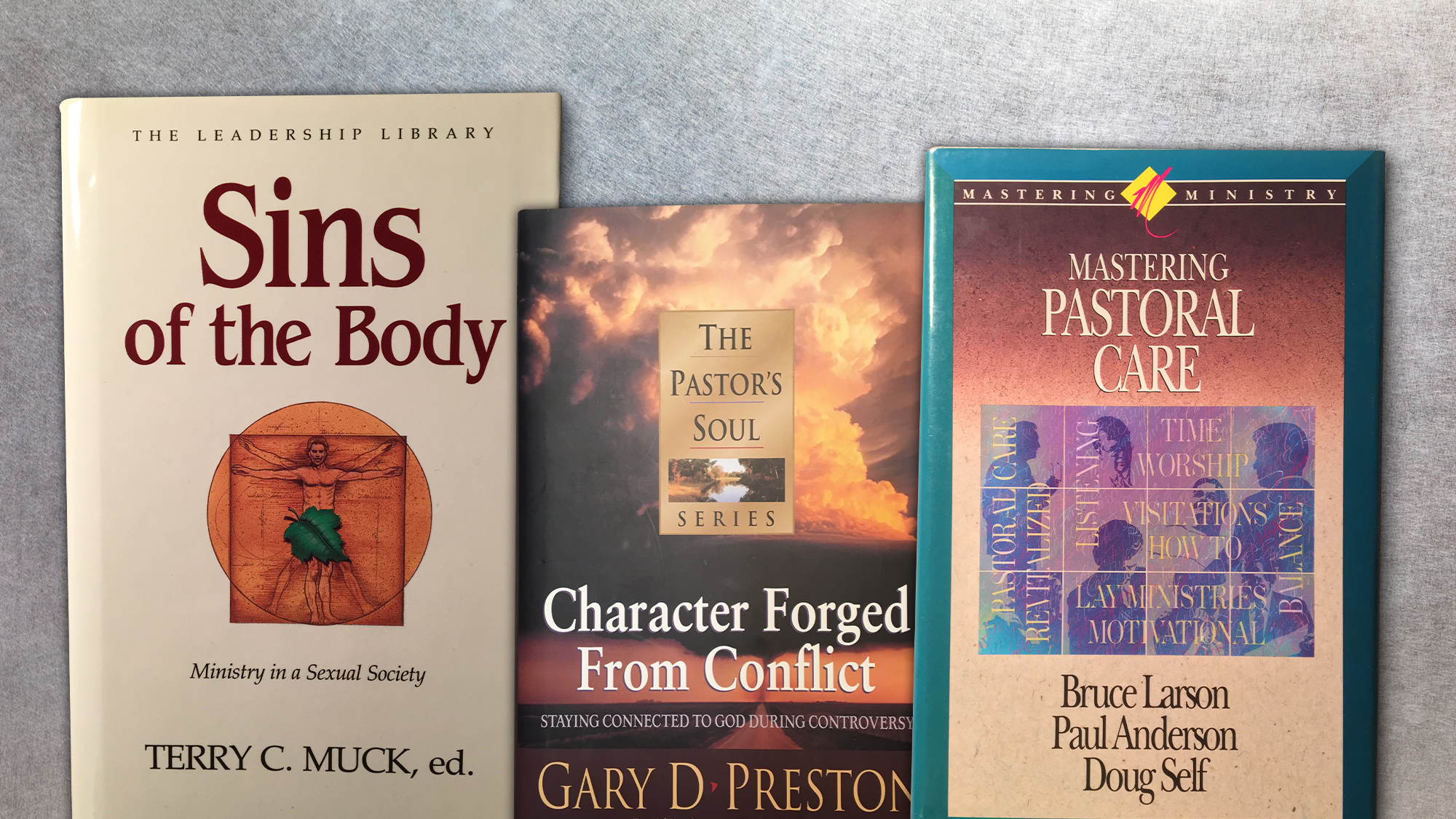
    Fourth, above all pastors are to be examples of the mortification of the self and the flesh. They are to exhibit daily self-denial. The pastor stands before his or her congregation as a whole package: pastor, father, husband, mentor, spiritual director, sibling, friend, and fellow Christian. As a "fellow" Christian the pastor is a model before everyone of the "death to self, death to the flesh" life and lifestyle. Many today are nervous about putting pastors on pedestals and of elevating pastors above the general priesthood of all believers. That is understandable, but the opposite extreme isn't any better. We cannot lose the expectation that the pastor should be a really good example of what it means to live properly before God.

    I don't consider myself old-fashioned; I don't consider myself a stick-in-the-mud. But I'm quite happy to say that pastors are to be holy and reverent and so deeply grateful for the grace to be a pastor that they'd never advertise themselves with the word "personality," which is nothing other than the word "SELF" dressed up in postmodern clothes they picked up on Freud's couch. The best word for a pastor on the website is still "Pastor."

    scot-mcknight.jpg

    Scot McKnight is the Karl A. Olsson Professor in Religious Studies at North Park University, author, and blogger.

    Posted by UrL Scaramanga on February 5, 2009


    Trackback Pings

    TrackBack URL for this entry:
    http://blog.christianitytoday.com/mt/mt-tb.cgi/1978


    Comments

    Thank you for that. My family recently moved, and we are currently looking for a church.

    I also grew up the son of a Pastor who really is a Pastor. Growing up his son I was especially benefited by the traits you mentioned in this article.

    Thank you for the blog post. It has given me a good frame of mind in my church-seeking.

    Posted by: JP at February 5, 2009

    ...could not agree more!

    ...thanks for the reminders in the blog post

    Posted by: Wes Roberts at February 5, 2009

    Insightful post Scot. I've looked with disgust at the "cult of personality" that surrounds many pastors, but to be honest there are times I feel the temptation to follow in their footsteps. Power is an alluring thing, and when our models of pastoral success are larger than life personalities, it's easy to see how many succumb to its temptations.

    I'm not sure that I totally agree with the link you made between the desire to be authentic and the me centric personality. In my experience you take a real risk as a pastor when you let down your guard to let people see that you're human. My concern isn't so much with those who try to be authentic, but rather those who carefully manage their image so as to be perceived as pious, while sprinkling in comments about their favorite latte etc in order to appear human. That seems manipulative to me.

    Posted by: Brian Beckstrom at February 5, 2009

    This post reminds me of a conversation I had with a therapist friend who refuses to go to church.

    He said that churches are too often driven by personalities and thus, but extension, personality disorders.

    That's always stuck with me.

    Dovetailing off of this too is this question:

    Do we really need to officially rename the leadership roles of a church to the point of being unrecognizable?

    I remember reading about how certain people weren't "pastors"...they were "dream awakeners", "cultural architects", etc. etc.

    It all seems a bit pretentious. Then again, in my upbringing, I've known more "Senior Pastors" (with emphasis on the SENIOR) who were pretty self-inflated without any personal "authenticity" or fancy-schmancy titles.

    Posted by: Nathan at February 5, 2009

    I appreciated your post very much, although the subject matter is pretty sad. You know what's funny about this? The term "pastor" is mentioned only once––once––in the New Testament in Ephesians 4:11 where the role is lumped in with four others.

    The pastor is a role of servanthood and humility, serving individuals in the congregation in their spiritual, mental, and physical well-being.

    "Preaching" as far as the Bible speaks of, is not what a pastor does. That's what an evangelist or preacher does. A preacher and pastor are not synonymous.

    As far as positional titles are concerned, Christ spoke to that in Matthew 23:8-12. Summing it up, it says don't use them.

    Christ was very clear about the leadership of His church. He set up a three-pronged approach: He as the head, elders, and deacons. Hmm...no pastor stated there. Plus, the church is to be autonomous, and there are to be no hierarchies or control by authority of individuals or organizations.

    1 Timothy 3 has a huge laundry list of qualifications for selecting elders and deacons. You'd think there'd be another chapter or two in 1 Timothy detailing qualifications for a pastor if he were to be above elders and deacons. You know what? There's not a single qualification listed for a pastor.

    How did the role of pastor ever evolve to that of a president or CEO? It's for this very reason––because we've gotten off base of what Christ intended for His church––that we're even having this problem with "personalities."

    Thinking we can improve Christ's plan––now that's what I call bold.

    Posted by: Todd Billingsley at February 5, 2009

    Appreciate the words! I'm glad to know there are others who notice these kind of things and write their thoughts down.

    People really do appreciate it when they have a pastor who pastors them in the biblical sense of the word - so many, however, never experience that.

    Posted by: John at February 5, 2009

    First, Scot, I don't think that "authenticity" is being "just like you in every way." Most of us are mostly inauthentic. Taking my cue from Henri Nouwen, I think pastors must be MORE authentic than everyone else, modeling the way of Jesus, who offered only himself and refused the temptations to be relevant, spectacular and powerful. (Okay, now I'm just quoting Nouwen outright.)

    One other thought: David Fitch's blog (listed on the sidebar of this blog) recently featured a discussion on the difference between the white American church and churches rooted in other ethnic and racial groups, and particuarly what they expect in their pastors. Generally speaking, those who come from privelege expect to see their pastors model humility and sacrifice, while those who come from poverty expect their pastors to be a model of what they might aspire to, how hard work and responsibility can result in prosperity.

    Posted by: Nate Woodward at February 5, 2009

    I agree with all four points here, and agree that our generation has done a poor job of giving reverence to the role of the pastor - especially in lame attempts to sound cool and trendy. Not having seen the website mentioned, I don't know if that's what's going on there or not.

    However, I would like to comment on the topic of identification and authenticity from the pastor with his congregation.
    I think the main motivation that we want to be authentic and to identify with our congregation is because we do not want to be perceived as better or more holier than others. We don't want to be a spritual elitist losing our influence. I agree that the pastor role is set apart - but too far apart creates equal pitfalls & problems. I know you would agree with that.

    Furthermore, as a pastor I feel that it's part of my job to get people to take this journey with me, not just take the journey myself. I have to be open to build real relationships and do ministry together with a congregation, not just be a one man ministry show. I know you would agree with that as well.

    That's just insight into why being authentic and identification is so important to me.

    Posted by: Ed Ingram at February 5, 2009

    I agree. One that got me recently was a television spot where the pastor of a two campus mega-church was being advertised as a "spiritual life coach". I had to laugh on that one!

    Posted by: Kevin at February 5, 2009

    Thanks for the article Scot.

    I really enjoyed reading it andas a Pastor of young people was encouraged to be reminded of the role of 'pastor'. It seems there are so many ideas on what a leader is and does and it can get confusing when we lose sight of Jesus' way of leading. Thanks for realigning my perspective this morning (I need it every now and again!).

    When I think of Jesus I think: Shepherd, sevant, saviour, as well as prophet, priest and king. What a leader we have!!

    Posted by: Stuart at February 6, 2009

    I don't think much can be said after Todd's post... Apparently "deacon," "elder," "pastor," and any other title is only valid on an informal, internal basis. And if we follow that, will this post still be relevant?

    Posted by: Chris (Jesdisciple) at February 6, 2009

    There's nothing better or more beautiful than when the personality of Jesus lives in and shines through another believer, especially if they're a pastor or other leader. Anything else, any other personality, is usually a distraction or worse.

    Posted by: John at February 7, 2009

    blame it all on peter - he claimed the first popeship, and decided they'd all wear that silly hat...

    let's face it: people didn't follow "the twelve' - they followed the Main Personality, Jesus. after Jesus left, james became the 'head' of the church in jerusalem - not a 'leadership team'. yes, there were checks and balances, but there was still a 'leader'.

    people follow individuals - they don't follow 'boards of deacons' or 'elders'. paul, in writing these sections of the new testament, likely saw himself as the lead, and put all these boards underneath him as he went church to church - as much out of fear of putting the wrong man in control as in fear of being relegated to unnecessary himself.

    all the key books in the new testament have individuals' names for titles, don't they? what was included in the canon had to be tied back to an individual who had direct contact with Jesus.

    the focus on individuals has been there from the beginning - i don't see it as anything new.

    but what is new is every pastor having his own blog, saying 'read me! read me! what i have to say is SOOOO important,' posting his picture, and claiming how his church will 'meet YOUR needs!' plus, it gives him a much greater reach than a 'local pastor' ever had, unless he rode around on horseback and served multiple churches.

    the modern day publishing houses are as much to blame, too, if we really want to start pointing fingers.

    ultimately, though, where 'self' truly resides in modern chrisitianity is in the person sitting in the pew.

    (thanks for reading what i had to say here - i'm sure you'll agree it was SOOOOOOO important, and i've no doubt it met YOUR needs.

    now go check out my blog...)

    Posted by: mike rucker at February 8, 2009

    Interesting take. Well done. Especially appreciate the call for reverential respectability and the cultivation of personal holiness. But could we entertain the possibility that in quibbling over the usage of the word "personalities", we might be distracted from more essential issues? All this fuss over using the term "personalities". Really? Wisdom demands we reserve our condemnation of the aforementioned church's practices until further acquainted with the original framework/intent. Last I recall, the word "personality" isn't intrinsically synonymous with "celebrity". And in a specific context, doesn't it refer to "one's character traits and qualities"? Or even "the nature of one's being"? Two thoughts: 1. I want my pastoral staff/ leadership team to be secure in identifying temperaments (theirs and mine)so together we recognize where we might be most productive in ministry. 2. Because our current paradigms of "doing church" are maladjusted, how many of us in congregations of 200+ will have ample opportunities to personally know leadership-especially the pastor? What a provocative way to discover interesting information about the staff! (As an aside, why waste valuable time or space dissecting endless debates over whether "senior" should be descriptively applied before the title pastor? For if Biblical literalism is our chief end, be prepared to use the Greek word poimen instead of its English equivalent.) Certain phrases were probably not meant to be appealing to the very people who find them distasteful. Let's patiently remember that our brothers and sisters might be exercising the vital grace of "speaking the language of a different culture". New wineskins, even when loaded with new wine, always seem strange at first glance.

    Posted by: Sark at February 8, 2009

    Note the key line in the original post: "My upbringing had taught me certain things about a pastor"

    Every church community has it's own leadership culture and personality - and they're not all going to look like the one you came from. (Which doesn't automatically make them bad!!)

    Posted by: Bob at February 8, 2009

    Scot, Brilliant as always.

    Posted by: alison at February 9, 2009

    Scot, you have hit the nail on the right spot. Being a minister in Africa, I have seen alot of SELF playing its role in the lives of many ministers. The quest to be known is so rampant in our society that you can hardly see Christ been advertised, but the minister presenting himself as the Man of God. Many Pastors have drawn members to themselves instead of to Jesus Christ our Master. You see this played when a minister is coming to an area, people want to touch his clothes or a handshake for blessings. You are right by saying commitment to reverence both God and His work is important to the life of the Pastor. This can only come only when there is a daily self denial. Presenting Christ to the fullest to the congregation will mean the pastor risk becoming insignificant before his audience. I pray that ministers will uplift Christ and see themselves as servants in the vineyard of the Master.

    Posted by: Yohanna Yusuph Garba at February 9, 2009

    Scot, first off - great post. On the money and deeply insightful. But, yeah there was a “but” coming, it isn’t realistic.
    I have been pondering the nature of being a pastor during my current transition. I am not sure we want pastors in the church at this point, even among the emergent congregations. When I look at the profiles of churches seeking senior leadership, those larger than 150 are looking for a visionary leader who can cast a compelling vision of their future as they penetrate their community for the kingdom. These leaders need to be adept at handling the staff, bring savvy marketing skills with a riveting public speaking presence.
    We are looking for those who could be on the cover of SELF. We think this is what will work. I say we because it creeps into all tribes. Pastors are just not that successful. They are faithful, but they do not help the church real “the next level”, whatever that may be. Oh we may wistfully dream of the pastor we remember or hope we might have come to our church, but then it comes to pulling the trigger, we will for this season choose the personality.

    Posted by: kent at February 10, 2009

    We will be anything: CEO, therapist, counselor, manager, other than the word "pastor." And the churches we serve will let us. Sad, but true. Good post, Scot.

    Posted by: Clay Knick at February 11, 2009

    valid point, i think, but ironic.

    valid: i offer another example, from preaching. the biblical text now plays such a marginal role in sermons -- and the personality of the preacher such a primary role -- that i often hear people respond 'so-and-so is a great preacher.' i rarely hear, 'now i understand what God is saying in that text, and how i should respond' or 'so-and-so is a great God.'

    ironic: is there any movement more self-promoting than the emergent 'everything must change, and we know what and how' (unless, perhaps origins: 'we know even better than those yesterdays-news emergent groupies'). or any practice more self-promoting than blogging daily / weekly pearls of wisdom so that not just my friends, but the whole world can be blessed by my insight? (meaning no offense)

    humility is not a characteristic american virtue, and appears genuinely counterproductive in influencing others. recent Time mag article, Competence: Is Your Boss Faking It? reports a study indicating that people who are dominant and speak often and confidently are assumed to be the most competent (even though they may not actually be). in some parts of the world, though, self-depreciation is valued, and american self-assertion comes over as obnoxious. still, it works here.

    rather reminiscent of 1 Cor 1-4, with the exception that the text provides no indication that Apollos engaged in self-promotion, only that the Corinthians did so on his behalf.

    Posted by: jimbob at February 14, 2009

    I've served in the pastorate, but have been employed in a secular job for the past 16 years. While I have found that many of my colleagues in the the pastorate genuinely have been and still are men of compassion and humility, I think that pastors who go into this kind of self promotion are following a trend in the secular business world. Unfortunately I've seen little difference in the lives of pastors who follow this approach than those of business leaders who go on the path of self glorification -- unbearable boastfulness, cowardly backstabbing and abusive egomania. The path that leads to 'empty suits' in corporate offices will lead to 'empty suits' in pulpits. I think that the need is for them to follow the path of the Lord they profess to serve, and take up the yoke of the One who is meek and lowly in heart.

    Posted by: Dale at February 15, 2009

    Pastors!

    Good called shepherds for His flock on earth.

    Keeping the sheep safe from the world, themselves, and the wiles of the devil.

    It is a great responsibility and an awesome calling.

    God bless all His pastors on earth!

    Posted by: Steve Martin at February 18, 2009

    Thanks Scot. A big 'Amen' to your comment that we need more Eugene Petersons. One of the most inspiring messages I've ever heard was his General Session at the 2007 NPC when he opened by asking the question, "What are pastors good for?" His answer to that question was probably the best exposé of the pastoral role I've ever heard. As a pastor myself, it gave me a whole new perspective on what it is that I'm meant to be doing. I highly recommend this to anyone who hasn't heard it. (It is available for free download via iTunes at the Zondervan Podcast.)

    Posted by: Mick Martin at February 18, 2009

    Todd-

    I was really excited by your post above, seemingly ending the conversation, but as with all such disagreements, if it were that simple our forebearers would have figured it out by now.

    In fact, the word "pastor" does not only appear once, but 17 times in the New Testament. The Greek word in Eph. 4:11 being poimen which is translated the other 16 times as "shepherds". Of course, your mileage may vary based on translation I'm sure, but that one thought--that the word only appears once--falls down under closer scrutiny.

    That said, I love that Prophet and Evangelist are listed before Pastor and Teacher. Food for thought (and who's ranking these anyway?!?!!).

    Posted by: Bil_ at February 18, 2009

    good article Scot, i think the present challenge to the singular position of 'the pastor' [as a modern office] has mcuh truth to it. many of the pitfalls you mentioned are a result of the unscriptural development of this offcie.

    Posted by: John Chiarello at February 19, 2009

    Well, yes -- but should a church have a website at all ?
    I mean, most of what a church dispenses is not found on its website -- yet, it needs a website just like it needs an entry in the Yellow Pages.

    Let's not be too hung-up on "style".
    I'd agree that the Pastors are setting the tone in the church (including a tone of dependence on God and sanctification etc), but I don't think the web pages do that in any lasting way...

    Posted by: Chris at March 3, 2009

    Post a comment


    Remember Me?

    (1500 characters max; you may use HTML tags for style)

    Verification (needed to reduce spam):